General · Oct 13, 2026
What Is a Good Age for Breast Reduction in Farmington Hills?
Breast reduction can be performed at any age. Learn what shapes the best age for breast reduction in Farmington Hills. Call (248) 780-0558.
Read article
How long does facial fat grafting last? Results can last for years, though not all grafted fat survives. Book a consultation: (248) 780-0558.
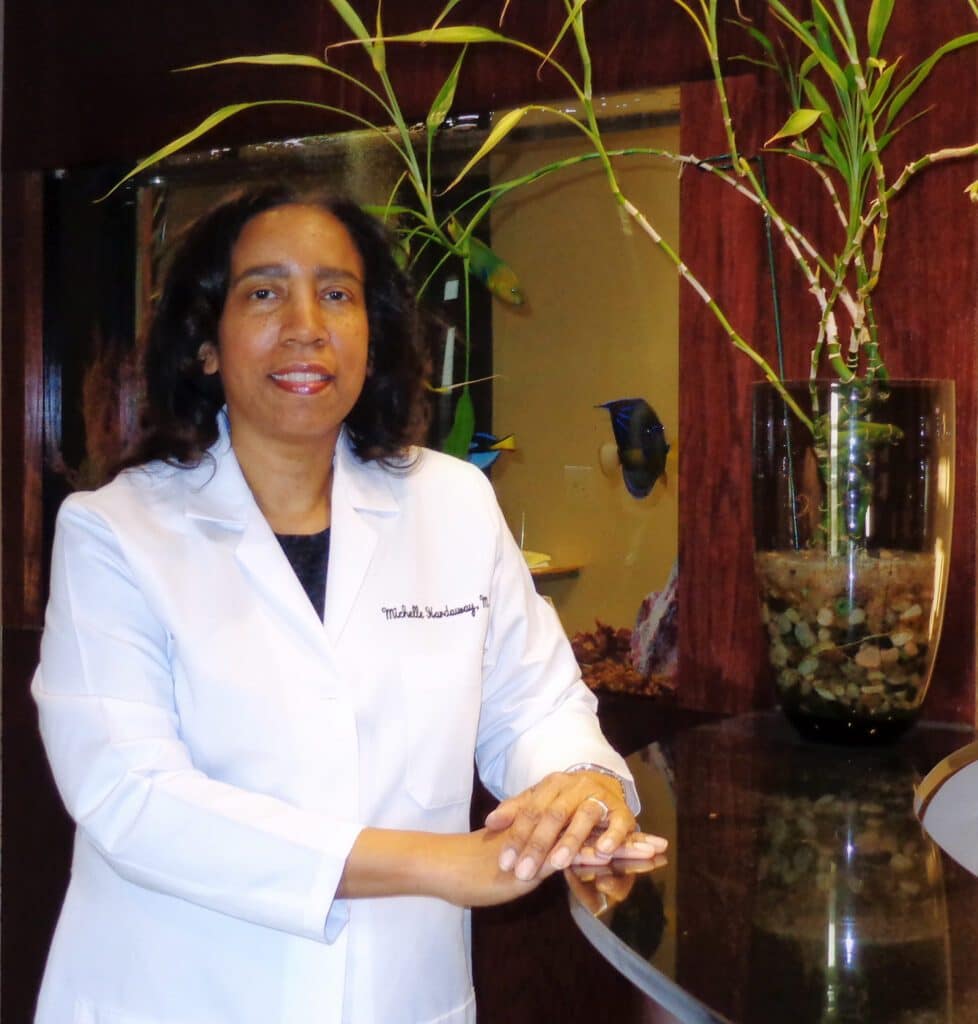 Dr. Michelle Hardaway, M.D., F.A.C.S.
Results can last for years for facial fat grafting in Farmington Hills, but not all of the transferred fat survives. That’s the short answer to how long facial fat grafting lasts, and it takes about six months for the injected fat cells to develop a new blood supply and for final results to show.
This guide from Aesthetic Plastic Surgery & Laser Center in Farmington Hills explains what the research shows and how fat compares with fillers.
To ask about a plan for your face, call (248) 780-0558.
You can also send the Farmington Hills office a message with questions before you book.
This content is for general informational purposes only and should not be taken as medical or other professional advice. Readers should consult a qualified licensed professional for advice about their specific situation. Reading this page does not create a physician-patient relationship. All surgery carries risk, and individual results vary. Seek immediate emergency care for severe or urgent symptoms.
Last Updated: October 22, 2026

Facial fat grafting results typically last for years, and some of the transferred fat becomes a lasting part of the face. Some of the fat may be reabsorbed, though, because not all fat cells survive the procedure. The cells that do survive take about six months to develop a new blood supply.
At this practice, facial fat grafting, also called facial fat transfer, restores volume to areas such as:
Because the fat comes from your body, an allergic reaction is unlikely.
Facial fat grafting moves fat from one part of your body to your face. It’s an outpatient procedure, so you go home the same day. Facial fat grafting is often done under local anesthesia, but the type can vary. Ask at your consultation which type is planned for you and what you can expect to feel.
During the procedure, the surgeon:
You may need to wear a compression garment afterward to help with healing.
On average, just under half of the grafted volume was retained at follow-up. In two reviews that included reconstructive and cosmetic cases, a 2019 review found about 42% for fat that wasn’t enriched, and a 2021 review pooled an average of 47%. Individual studies in the second review ranged from 26% to 83%.
| Review | What it included | Average fat retained |
|---|---|---|
| Gornitsky et al., JPRAS Open, 2019 | 43 studies, 4,577 patients with facial contour defects, average follow-up 13.9 months | 41.63% (fat that wasn’t enriched) |
| Lv et al., Aesthetic Plastic Surgery, 2021 | 27 studies, 1,011 patients, follow-up of 3 to 24 months | 47% pooled; individual studies 26% to 83% |
The second review found that the method of measuring volume significantly influenced the reported rate. Its authors concluded that the exact percentage of facial fat retained is currently unpredictable.
At your consultation, ask how a surgeon plans for partial reabsorption, since the exact amount that takes is currently unpredictable.
Swelling can take up to several weeks to go down after fat grafting. Not all fat cells survive the procedure, so you may not keep all the volume you want. The cells that do survive take about six months to develop a new blood supply, which is also when final results show.

Bruising, swelling, and tenderness are common in both the area the fat came from and the area it went to.
Dr. Hardaway discusses the potential for some fat reabsorption at your consultation, along with whether you have enough donor fat.
Weight change, repeat grafting, and the passage of time all show up in the research on facial fat grafting. The table below shows what the studies found, and the five-year section that follows covers weight in more detail. The exact amount of fat that takes is currently unpredictable.
| Factor | What the research found |
|---|---|
| Repeat grafting | One review found a trend toward better retention for secondary fat grafting procedures. |
| Time | Volume after grafting isn’t stable over time. |
| How volume is measured | The measurement method significantly influenced the reported retention rate. |
Good candidates for fat transfer are generally close to their ideal weight, in good health and don’t smoke or can quit. They also have enough body fat for the area being treated and want subtle, natural-looking results with realistic expectations.
This guide on natural-looking results from conservative plastic surgery explains how that kind of planning works.
One recent five-year study of facial fat grafting followed 12 patients with 3D surface imaging. Facial volume at five years was associated with each person’s weight gain, not with how much fat had been injected. The authors noted that weight change complicates long-term studies of volume retention.
Satisfaction in that group had returned to pre-operative levels by five years. The authors wrote that repeated fat grafting is necessary and could improve satisfaction over the long term.
Fat that survives grafting can last longer than temporary fillers. Some dermal fillers are naturally absorbed over time, so you may need to repeat a filler treatment to keep the effect. How long a filler lasts depends on the material and the area it’s injected into.
| Facial fat grafting | Temporary fillers | |
|---|---|---|
| Material | Fat from your body, harvested and purified | A filler product |
| How long it lasts | Surviving fat can last for years | Absorbed over time; repeat treatments to maintain |
| Upfront cost | Initially more expensive than temporary fillers | Lower upfront |
This guide on who should inject Botox and fillers in Farmington Hills explains what to check before you book an injectable treatment.
You might. The number of sessions depends on the size of the treated area and the volume you want, and one review found a trend toward better retention when an area was grafted a second time. Ask at your consultation when a second session would be considered.
Dr. Hardaway can combine facial fat grafting with other facial plastic surgery. Her face and neck procedures include a facelift in Farmington Hills.
This guide covers why a lower facelift and neck lift may be performed together.
Plan on a recovery period of about one to two weeks for facial fat grafting, though swelling can take up to several weeks to go down. You may be back at work and regular activities after a week, or you may need two weeks or more.
For a broader picture of healing, see this guide to recovery timelines after plastic surgery in Farmington Hills.
Like any surgery, fat grafting carries risks. These include bleeding, fat embolism (fat that enters a vein and travels to the lung), fluid buildup under the skin, most fat cells not surviving, significant scarring and results you’re unhappy with. In the facial review of 43 studies, complications were reported in 2.27% of patients, and asymmetry was the one reported most often.
After fat grafting, call your plastic surgeon immediately if you have:
Seek emergency care for severe or urgent symptoms.
Dr. Hardaway discusses the procedure at your consultation, along with realistic expectations about outcomes and recovery. The questions below follow the points this article raises, so you can bring them to your appointment and compare answers if you meet more than one surgeon.
To book, request a facial fat grafting consultation in Farmington Hills or call (248) 780-0558. The office is at 27920 Orchard Lake Rd in Farmington Hills. All consultations are paid and appointment-based to ensure dedicated time and a personalized plan.
Fat that survives grafting can last for years, and some of the transferred fat becomes a lasting part of the face. Not all of it survives, though, and volume after grafting isn’t stable over time.
It takes about six months for the injected fat cells to develop a new blood supply and for final results to show. Swelling can take up to several weeks to go down before that.
It can. In a five-year study of 12 patients, facial volume was associated with weight gain, not with how much fat was injected. Good candidates are close to their ideal weight before surgery.
In two reviews that included reconstructive cases, a 2019 review found average retention of about 42% for fat that wasn’t enriched, and a 2021 review pooled an average of 47%. In the second review, individual studies ranged from 26% to 83% retained, and its authors called the exact amount currently unpredictable.
No. Consultations at this practice are paid and booked by appointment.
Dr. Michelle Hardaway was Chief of Plastic and Reconstructive Surgery and Director of the Burn Center at Detroit Receiving Hospital. She’s a board-certified plastic surgeon and a Fellow of the American College of Surgeons, with over 20 years of experience.
Today she remains affiliated with:
She has written on facial rejuvenation with fat injections, and her Farmington Hills office has an accredited surgical suite.
Her training and appointments are on the page about Farmington Hills plastic surgeon Dr. Michelle Hardaway.
Facial fat grafting is one of the procedures she offers in face and neck surgery in Farmington Hills.
You can also browse her Farmington Hills facial plastic surgery before and after photos.
This guide on how to choose a plastic surgeon in Farmington Hills walks through the checks worth running before you book.
Breast reduction can be performed at any age. Learn what shapes the best age for breast reduction in Farmington Hills. Call (248) 780-0558.
Read articleDeciding whether a lower body lift is worth it: who it helps, the scars and recovery it asks of you, how long results last, and the questions to ask first.
Read articleMommy makeover recovery time, week by week: the first days at home, returning to work and exercise, and when to call your surgeon. Call (248) 780-0558.
Read articleBring it to a consultation. All consultations are paid and appointment-based to ensure dedicated time and a personalized plan.
Not ready to book? See patient results or read the blog first.
Dr. Hardaway sees every consultation personally. You will have time to ask what you came to ask.
Prefer to talk now? (248) 780-0558
Submitting a request does not create a physician-patient relationship and does not confirm an appointment. A member of the team will be in touch to arrange one.