Key takeaways
- During surgery: anesthesia means you should not feel pain.
- Afterward: tightness from ear to ear, tenderness and numbness are typical, and pain medication is provided if needed.
- Worst days: swelling peaks 48 to 72 hours after surgery.
- Hair washing: usually allowed one or two days after surgery.
- Looking normal: most people are back at work within about one to two weeks, and signs of surgery fade over two to three months.
This content is for general informational purposes only and should not be taken as medical or other professional advice. Readers should consult a qualified licensed professional for advice about their specific situation. Reading this page does not create a physician-patient relationship. All surgery carries risk, and individual results vary. Seek immediate emergency care for severe or urgent symptoms.
Last Updated: November 28, 2026
Table of Contents
Is an Eyebrow Lift a Surgery?
Yes, an eyebrow lift is a surgery, but you should not feel pain while it is done because you are under anesthesia. Cleveland Clinic states that “You won’t experience pain during a brow lift procedure because your surgeon will use an anesthetic.” At this practice, it typically takes one to two hours.
A brow lift is performed under general anesthesia or local anesthesia with sedation, and the option that suits you is decided at your consultation, along with the technique: endoscopic, temporal or coronal. Incisions are placed within or just behind the hairline, and their exact location depends on the technique.
The technique can shape how your recovery feels, although none of the sources we checked rank brow lift techniques by pain. An endoscopic lift uses a small camera and tiny scalp incisions, which can mean less scarring and a shorter recovery. A temporal lift raises the outer brow through incisions along each temple, and a coronal lift uses one ear-to-ear incision hidden in the hair, which leaves a larger area to heal.
According to an ASPS guide to brow lift recovery, most patients return to work within a week of an endoscopic brow lift and around two weeks after other approaches. The Aesthetic Society adds that numbness behind the incision of an open brow lift usually persists for nine to twelve months.
What Are the Cons of a Brow Lift?
The main cons of a brow lift are the recovery and the usual surgical risks rather than severe pain. Expect tightness, soreness, swelling, bruising and numbness across the forehead and scalp for a week or two. The Aesthetic Society says “Pain is typically not a significant problem in brow lifts.”
It does describe “some discomfort and tightness from ear to ear across the top of the head and brow,” and says most patients feel their forehead is tight and somewhat numb the night of surgery. Other sensations you may notice:
- Tenderness or soreness at the surgical site, which Cleveland Clinic describes as normal while you heal.
- Numbness in the forehead and scalp that gives way to itching or tingling as nerves regrow, which MedlinePlus says can take up to six months to fade fully.
- Swelling and bruising on the forehead, the brows and possibly under the eyes during the first week.
Less common downsides are listed too. Cleveland Clinic names intense scalp itchiness, hair follicle loss around the incisions and limited brow movement among possible complications, and MedlinePlus lists persistent pain among the risks. Pain that gets worse instead of better should be reported to your surgeon.
The discomfort itself is usually manageable. The Aesthetic Society says your surgeon will provide pain medication if you need it, and Cleveland Clinic notes that over-the-counter pain relievers can ease soreness as you heal. Check with your surgeon before taking any medicine or supplement.
- Cold packs: your surgeon may suggest cold packs around your eyes for 48 hours to reduce swelling, according to The Aesthetic Society.
- Head elevation: Cleveland Clinic advises keeping your head elevated for at least two days, including while you sleep, and ASPS suggests a wedge pillow or several pillows.
- Activity: ASPS advises avoiding strenuous exercise and bending down during the first two weeks.
- Driving: ASPS says driving is permitted once pain is well managed without narcotics and mobility returns.
Your own aftercare instructions come from your surgeon and may differ from these general guidelines.
How Long Does It Take to Look Normal After a Brow Lift?
Most people look presentable for work and everyday life about one to two weeks after a brow lift, once swelling and bruising have settled. ASPS says swelling and bruising improve significantly in weeks one to two, when light makeup may be used, and that final results emerge over three to six months as the brow settles.
The first few days tend to be the most uncomfortable. The Aesthetic Society says swelling peaks 48 to 72 hours after surgery and bruising peaks on days three to five, and it puts typical recovery at one to two weeks. Cleveland Clinic notes that swelling goes down within two weeks but can take several weeks to disappear completely, and that your forehead can take up to six months to heal fully.
MedlinePlus says most signs of surgery should fade completely within two to three months, and that makeup can cover minor swelling and bruising before then. Cleveland Clinic says most people return to work or school within 10 to 14 days. Stitches or staples are usually removed about a week after surgery or dissolve on their own.
Light walking is encouraged early on. ASPS says workouts, running, tennis and yoga may be resumed in weeks 6 to 12 as your surgeon allows, and The Aesthetic Society suggests starting at half speed. If you have an important event coming up, ask your surgeon how much lead time to allow before you book your surgery date.
How Long After a Brow Lift Can I Wash My Hair?
You can usually wash your hair one or two days after a brow lift. The Aesthetic Society says showering and bathing are normally permitted one or two days after surgery, and MedlinePlus says you can shampoo and shower two days after surgery or once the bandages are off. Follow the timing your surgeon gives you if it differs.
Go gently at first. Because your scalp may be numb, The Aesthetic Society advises caution with hot water, hair dryers and combs, which can damage skin and hair when you cannot feel them properly. It also suggests using hair conditioner to loosen hair that became matted or knotted during surgery, and ASPS advises checking with your surgeon before going to the hair salon.
How Painful Is Eyelid Lift Surgery?
Eyelid lift surgery is usually mildly to moderately uncomfortable, and most people feel it as tightness or soreness around the eyes rather than sharp pain. At this practice, prescribed medication manages the discomfort at first, and most patients find over-the-counter pain relievers are enough after the first couple of days, much like brow lift recovery.
The difference is where you feel it. Eyelid surgery discomfort sits around the eyes, which may feel dry for a while, while brow lift discomfort spreads across the forehead and scalp. A temporal brow lift can be combined with eyelid surgery when a low brow and extra eyelid skin both add to a tired look. Read more about eyelid surgery (blepharoplasty) at the practice.
Frequently Asked Questions
Is there a difference between a brow lift and a forehead lift?
No. They are two names for the same procedure. ASPS describes a brow lift as “also known as a forehead lift,” and MedlinePlus covers it under the name forehead lift. Either way, the surgery raises the brows and smooths forehead wrinkles.
What should you expect during the first week of brow lift recovery?
Expect the most discomfort in the first few days, while swelling peaks. The ASPS brow lift recovery page says your forehead may be taped or your head loosely wrapped, and a thin tube may drain excess blood or fluid. The Aesthetic Society suggests keeping your back and head elevated while you sleep for about five to seven days.
You can talk through brow lift pain, recovery and technique at a paid consultation with board-certified plastic surgeon Dr. Michelle Hardaway at 27920 Orchard Lake Rd in Farmington Hills, convenient for patients across Metro Detroit. She reviews your health history, explains whether an endoscopic, temporal or coronal approach suits you, and walks you through recovery.
If you are not ready for surgery, the practice’s brow lift page also lists non-surgical options, including Botox or Dysport, dermal fillers and laser resurfacing. ASPS says botulinum toxin results typically last about three to four months. Before you pick an injector, read this guide on choosing a med spa or plastic surgeon for Botox and fillers, or see what to expect at your consultation.
All consultations are paid and appointment-based to ensure dedicated time and a personalized plan.
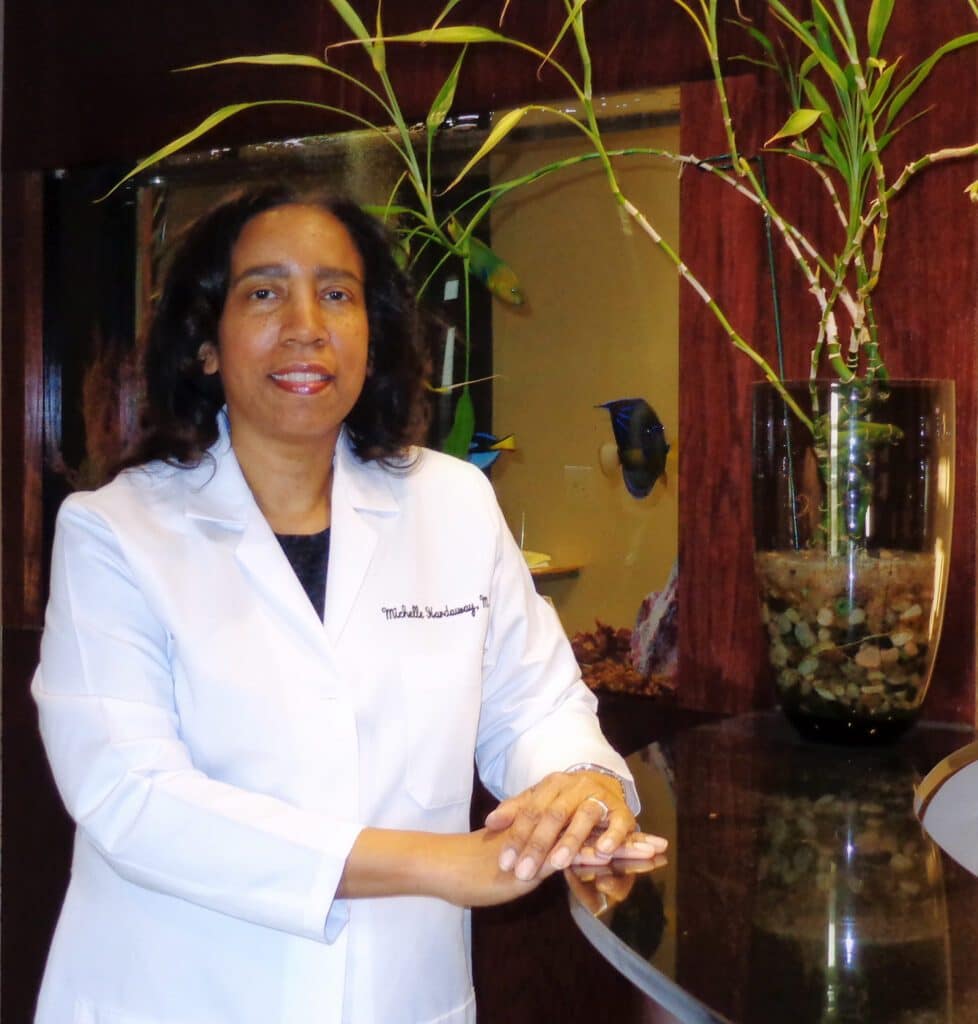
Written by Michelle Hardaway, M.D., F.A.C.S., Board-Certified Plastic Surgeon
Dr. Michelle Hardaway is a board-certified plastic surgeon and Fellow of the American College of Surgeons with over 20 years of experience. A former Chief of Plastic and Reconstructive Surgery at Detroit Receiving Hospital and an Assistant Clinical Professor of Surgery at Wayne State University School of Medicine, she performs every procedure personally at her QUAD A accredited practice in Farmington Hills.