Key takeaways
- Age: no published guideline sets a best age; development, pregnancy plans, weight and health matter more.
- Pregnancy: plan a lift once your family is complete, because a later pregnancy can undo much of the improvement.
- Health: being well, weight-stable and a nonsmoker counts for more than the date on your birth certificate.
- Longevity: results are long-lasting, but aging and gravity keep changing the breasts.
- Fullness: implants, not a lift, are what add size to the upper breast.
- Cost: the latest ASPS average surgeon’s fee for a breast lift is $6,816, before anesthesia and facility fees.
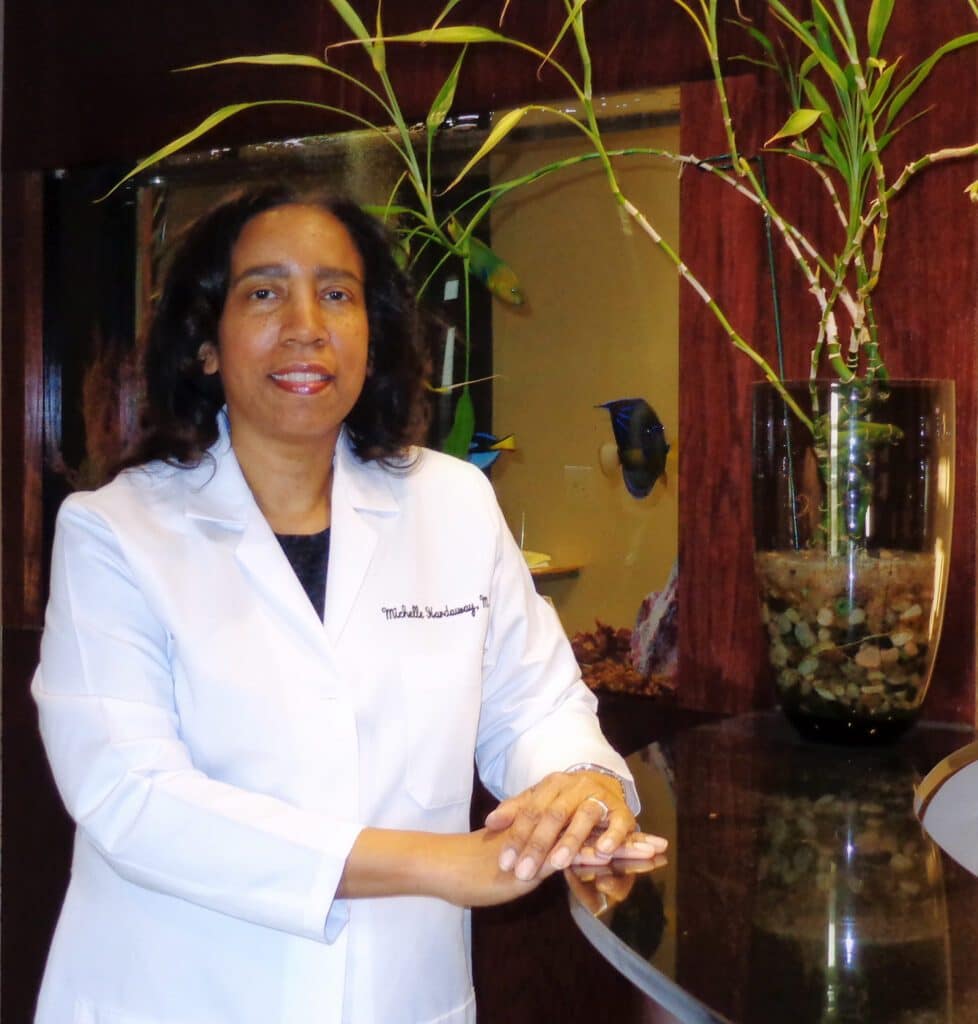
A breast lift, also called mastopexy, raises the breasts by removing excess skin and tightening the surrounding tissue. This guide from board-certified plastic surgeon Dr. Michelle Hardaway explains how age, pregnancy and weight affect timing, what a lift can and cannot change, its downsides, and what it costs.
This content is for general informational purposes only and should not be taken as medical or other professional advice. Readers should consult a qualified licensed professional for advice about their specific situation. Reading this page does not create a physician-patient relationship. All surgery carries risk, and individual results vary. Seek immediate emergency care for severe or urgent symptoms.
Last Updated: November 28, 2026
Table of Contents
What Age Can I Get Breast Surgery?
You can usually have breast surgery once you are an adult and your breasts have finished developing, typically from the late teens or early twenties. For a breast lift, the exact age matters less than your life stage: most surgeons advise waiting until your weight is stable and you have finished having children and breastfeeding.
Surgeons want the result to match your adult anatomy, so a lift before development has finished could be undone as the breasts keep changing. If a lift is combined with implants, age minimums set by the FDA also apply. ASPS notes that saline implants are FDA-approved for augmentation in women 18 or older and silicone gel implants for women 22 or older, as listed on its guide to implant types.
Pregnancy is the bigger timing factor. The American Society of Plastic Surgeons (ASPS) states that pregnancy can minimize or reverse the improvement a breast lift provides, and that breast surgery should be considered after childbearing is completed. Breastfeeding stretches the skin again, so many patients also wait until nursing ends. The ASPS results page adds that significant weight loss after breast surgery can also negatively affect how the breasts look, so many surgeons ask you to reach a weight you can keep before you schedule surgery.
If a future pregnancy is likely but sagging bothers you now, that is worth raising at your consultation. A lift done now can still be done, but you should plan for the possibility of a second procedure later.
At the other end, no published age limit stops an older adult from having a breast lift. Your overall health matters more than your age: ASPS lists being physically healthy, keeping a stable weight and not smoking as the core requirements. Many people in their 50s and beyond choose a lift to address age-related skin laxity and sagging. Your surgeon may ask for clearance from your primary care doctor first, especially if you manage a chronic condition or take several medications.
Can Saggy Breasts Be Perky Again?
Yes, a breast lift can make sagging breasts sit higher and look firmer by removing excess skin, tightening the surrounding tissue and raising the nipple. Exercise and skin creams cannot reliably do this, because sagging mainly comes from stretched skin and breast tissue rather than muscle. ASPS lists the signs that suggest a lift may help.
According to ASPS, you may be a candidate if:
- your nipples sit below the breast crease when unsupported
- your nipples and areolas point downward
- your breasts look flatter, elongated or pendulous
- your skin is stretched or your areolas have enlarged
- one breast sits lower than the other
ASPS explains that pregnancy, breastfeeding, weight fluctuations, aging, gravity and heredity all change breast shape and skin elasticity over time. That is why the timing question usually comes down to life stage rather than a birthday. The ASPS candidate checklist does not name any age at all.
Can Your Breasts Still Sag After a Breast Lift?
Yes, your breasts can still sag gradually after a breast lift, because the surgery does not stop aging. ASPS describes the results as long-lasting but notes that your breasts can continue to change with aging and gravity. Cleveland Clinic says results should last for several years and that the normal effects of aging continue over time.
According to ASPS, you can keep your result longer if you:
- maintain a stable weight
- keep a healthy lifestyle
- plan surgery after you have finished having children
Pregnancy and large weight swings are the two biggest reasons a result fades early, which is why timing matters more than age.
What Are the Downsides of a Breast Lift?
The main downsides of breast lift surgery are permanent scars, a recovery period, and the risks that come with any operation. The ASPS list of breast lift risks includes bleeding, infection, poor healing of incisions, breast asymmetry, changes in nipple or breast sensation, and the possibility of revisional surgery.
Other risks on the ASPS list include:
- anesthesia risks
- fluid accumulation
- fat necrosis, where fatty tissue deep in the breast dies
- deep vein thrombosis and cardiac or pulmonary complications
- partial or total loss of the nipple and areola, which is rare
Scars follow the incision pattern, from around the areola to an anchor shape, and the practice notes they typically fade significantly over 12 to 18 months. ASPS says changes in nipple or breast sensation may be temporary or permanent.
Cleveland Clinic also lists results you don’t like, which could require follow-up surgery. A lift on its own does not add fullness to the upper breast, so some patients are disappointed if they expected more volume. Talking through realistic expectations before surgery is the best protection against that.
What Can I Do Instead of a Breast Lift?
If your sagging is mild and you have lost volume, breast implants alone may be an option, since they add fullness that can make the breasts look higher. Implants do not raise the nipple or remove stretched skin, though. ASPS states that a lift does not significantly change breast size, so the two procedures solve different problems.
Put simply, a lift fixes position and shape, and an implant adds volume. A well-fitted, supportive bra can improve how your breasts look in clothes, but it does not change the breast itself.
If your breasts sag and have also lost volume, the two procedures can be done together. The practice explains how that decision is made, including signs that point toward a lift, implants or both, on its page about breast augmentation with a lift.
Is Breast Lift Surgery Worth It?
A breast lift is often worth it if sagging bothers you, you are healthy and weight-stable, and you have finished having children, because ASPS describes the results as long-lasting. It may be less worthwhile if you plan another pregnancy soon. Cost is part of the decision: the latest ASPS average surgeon’s fee is $6,816.
That figure is only part of the total price: ASPS states it does not include anesthesia, operating room facilities or other related expenses, so your final cost will be higher than the surgeon’s fee alone. You can read the national figure on the ASPS breast lift cost page.
At Dr. Hardaway’s practice, breast procedures average $6,600 to $10,500. Your price is confirmed at your consultation once the plan is clear, and your quote includes the surgeon, facility, anesthesia, pre-op testing, garments and follow-up care.
We offer financing options for qualified patients, including CareCredit. We do not accept insurance.
Frequently Asked Questions
What is the recovery like after a breast lift?
Cleveland Clinic says many people return to desk work and gentle walking about a week after a breast lift, with vigorous activity such as lifting and exercise restricted for up to six weeks. Follow the schedule your own surgeon gives you.
How painful is a breast lift without implants?
Pain varies from person to person. Most people describe soreness, swelling and tightness for the first several days rather than severe pain, and surgeons manage it with medication. Your surgeon will tell you which pain relief to use and when to call the office.
How long do you have to sleep upright after breast lift surgery?
Many surgeons ask you to sleep on your back with your upper body slightly raised for the first few weeks, to ease swelling and protect the incisions. The exact time depends on your surgery and healing, so follow your surgeon’s instructions.
You can book a paid consultation with board-certified plastic surgeon Dr. Michelle Hardaway at 27920 Orchard Lake Rd in Farmington Hills, convenient for patients across Metro Detroit. At your visit, she examines the degree of sagging, your skin elasticity and your breast tissue, and talks through timing around pregnancy and weight.
If you are weighing timing for a different breast procedure, this guide on the best age for breast reduction covers similar questions. You can also contact the office online with a question before you book.
All consultations are paid and appointment-based to ensure dedicated time and a personalized plan.
Written by Michelle Hardaway, M.D., F.A.C.S., Board-Certified Plastic Surgeon
Dr. Michelle Hardaway is a board-certified plastic surgeon and Fellow of the American College of Surgeons with over 20 years of experience. A former Chief of Plastic and Reconstructive Surgery at Detroit Receiving Hospital and an Assistant Clinical Professor of Surgery at Wayne State University School of Medicine, she performs every procedure personally at her QUAD A accredited practice in Farmington Hills.