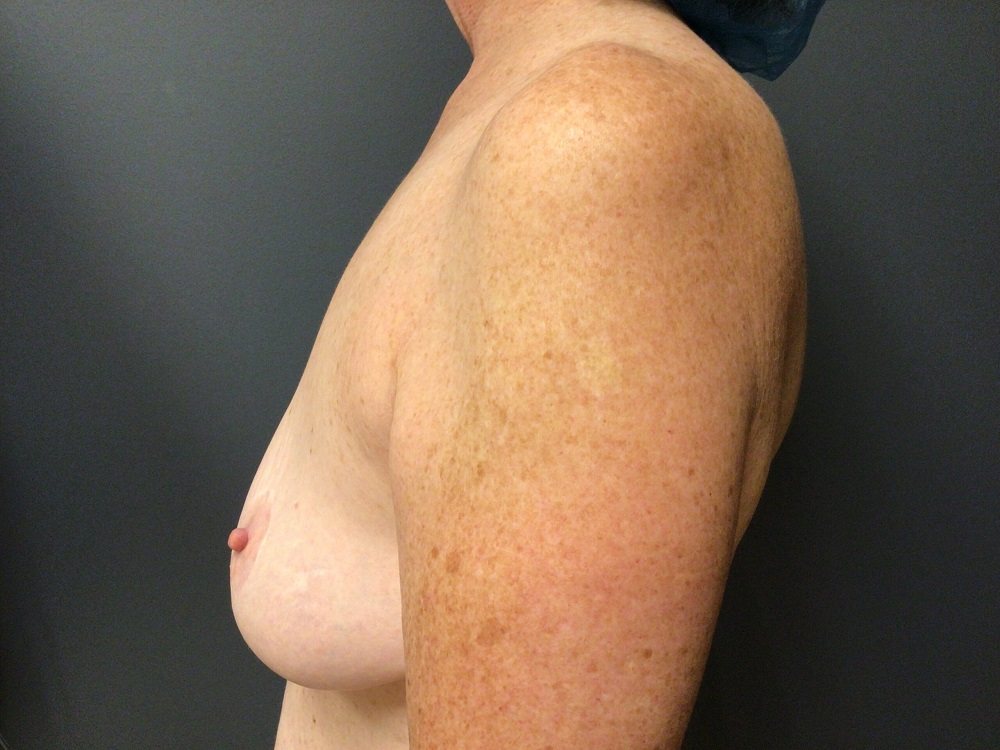
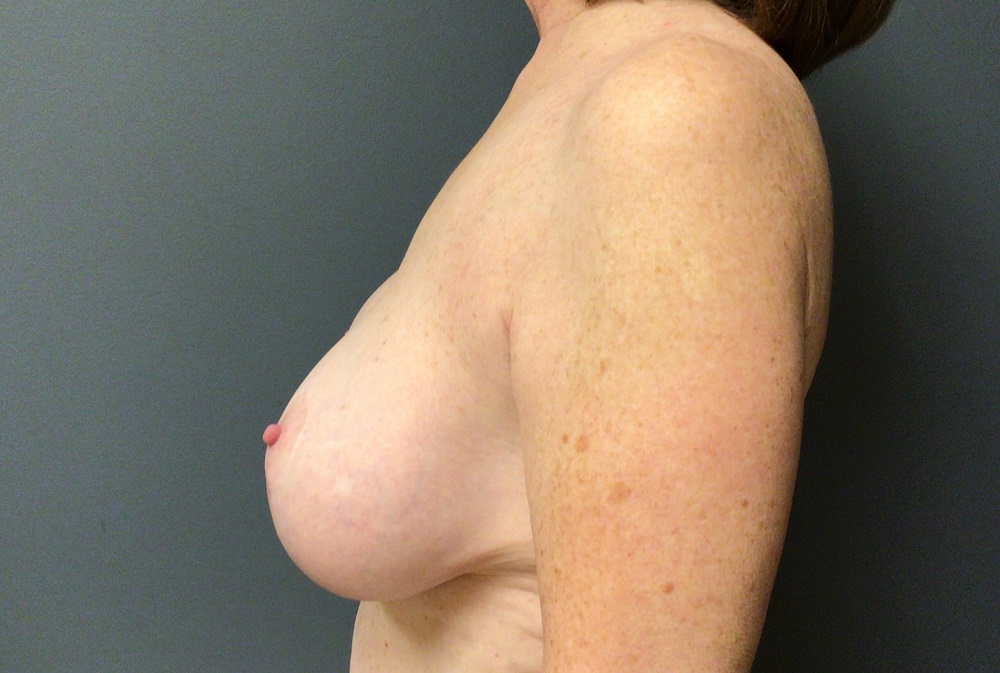
Breast Augmentation with Lift · Case 01
Ask about this result →

A breast lift (mastopexy) combined with implants, addressing both sagging and volume loss in a single operation. Performed personally by Dr. Michelle Hardaway, a board-certified plastic surgeon with over 20 years of experience.
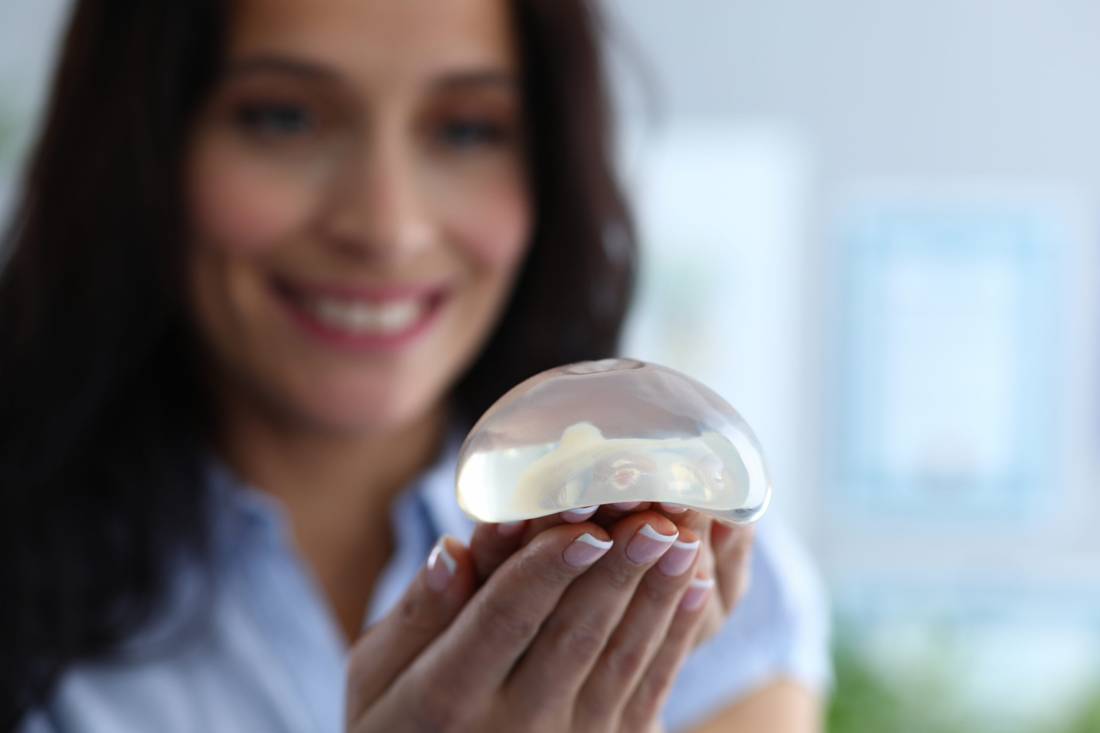
A breast lift on its own repositions and reshapes sagging breast tissue, and it cannot significantly increase breast size or restore lost volume. Implants on their own add size and may not adequately correct moderate to severe sagging (ptosis). Augmentation mastopexy combines the two for breasts that have changed with pregnancy, weight fluctuation or aging.
The procedure involves:
The combined procedure is often considered by women with:
Suitable candidates are generally in good overall health, non-smokers or willing to quit for several weeks before and after surgery, at a stable weight near their target, realistic about what the procedure can achieve, and committed to following post-operative instructions.
At consultation, Dr. Hardaway examines the degree of sagging, skin elasticity, existing breast tissue and overall proportions. That assessment decides whether a combined procedure suits you, or whether a breast lift or breast augmentation on its own is the better fit.
Before surgery, Dr. Hardaway takes measurements to plan implant size, type and placement, and discusses silicone or saline, round or anatomical shape, and placement above or below the muscle.
The operation is an outpatient procedure under general anesthesia in the practice’s QUAD A accredited surgical suite. It typically takes two to four hours, depending on the specifics of the procedure.
Profile sets how far the implant projects from the chest wall. A low profile has a wider base and less projection, a moderate profile balances width and projection, and a high profile has a narrower base and the most projection.
Subglandular placement (above the muscle) has an easier recovery but may show implant edges in thin patients. Submuscular placement (below the muscle) gives a more natural upper pole and better mammogram visibility. Dual-plane placement combines the two. At consultation you can see and feel different implant types before deciding.
First week. You wake up in a surgical bra that provides gentle compression and support. Discomfort, swelling and bruising are normal and managed with prescribed pain medication. Small drains may be placed temporarily. Most patients go home the same day. Rest, limit arm movement and sleep on your back.
Weeks 1 to 3. Stitches are typically removed within 7 to 10 days, and most patients return to desk jobs within one to two weeks. Light activities can resume, avoiding lifting anything over 5 pounds. You move from a surgical bra to a supportive sports bra as Dr. Hardaway advises.
Weeks 4 to 6. Most patients resume normal daily activities. Exercise is reintroduced gradually, starting with lower-body workouts, and strenuous exercise is avoided for four to six weeks. Breast sensitivity typically improves.
The breasts settle into their final position over three to six months as swelling resolves and the implants settle. Scars typically fade significantly over 12 to 18 months. Maintaining a stable weight, a healthy lifestyle, attending follow-up appointments and wearing supportive bras, especially during exercise, all help the result last.
Combining the two procedures is technically more complex than either one alone. Potential risks include those of any surgery, such as infection, bleeding and scarring, along with implant-specific concerns such as capsular contracture or implant displacement. Some scarring is unavoidable.
Dr. Hardaway is a board-certified plastic surgeon, a Fellow of the American College of Surgeons (F.A.C.S.) and an Assistant Clinical Professor of Surgery at Wayne State University.
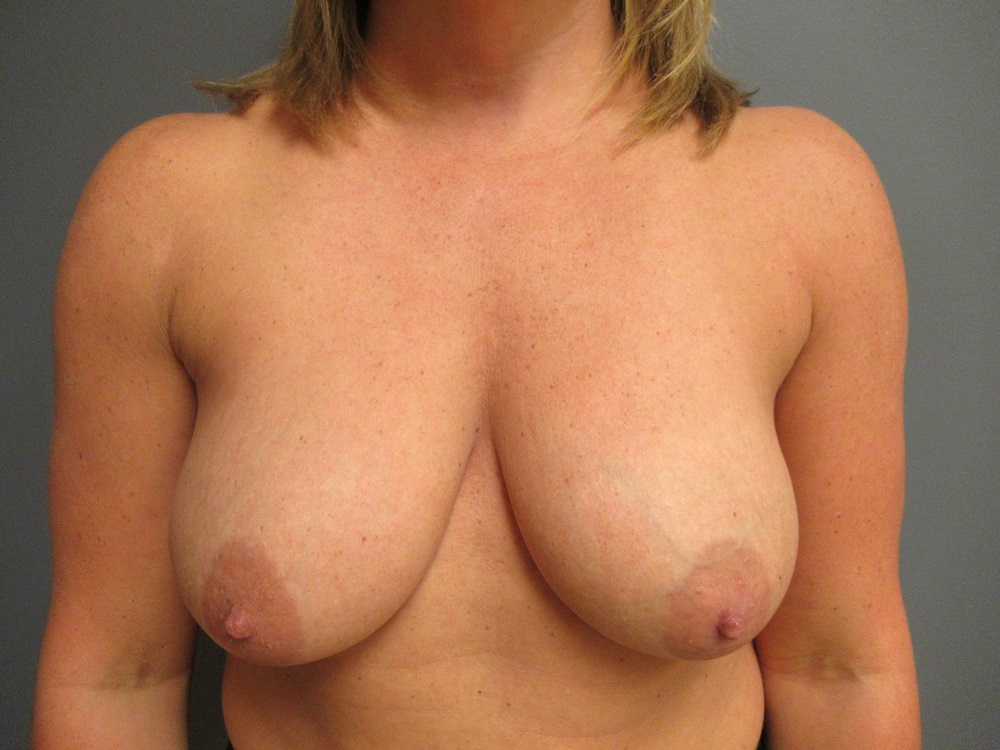
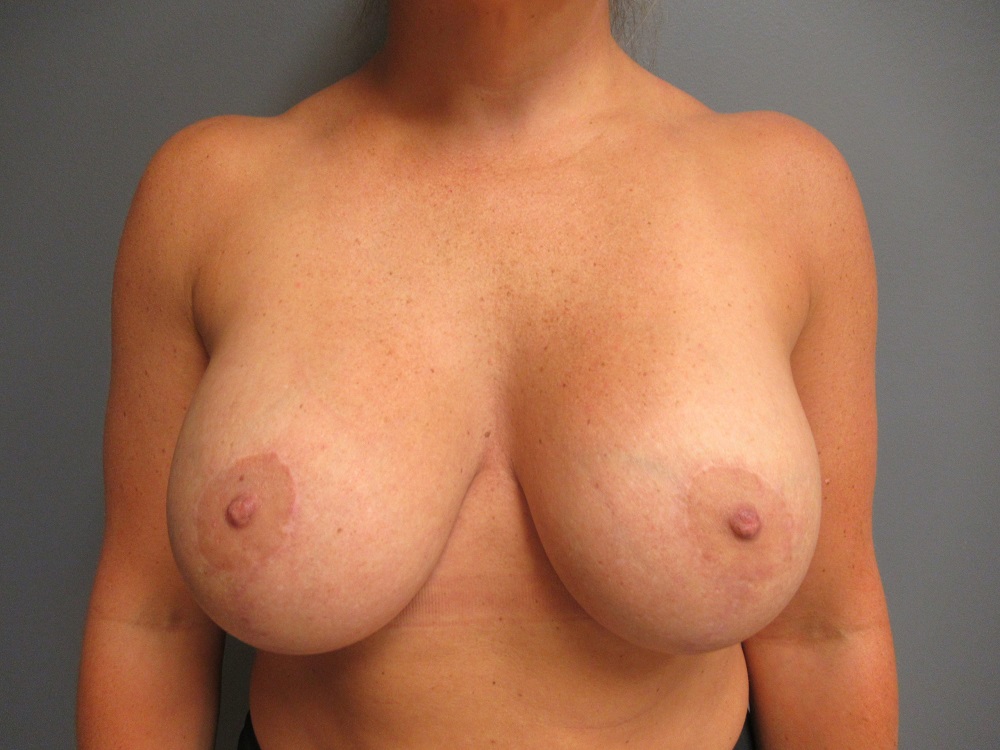
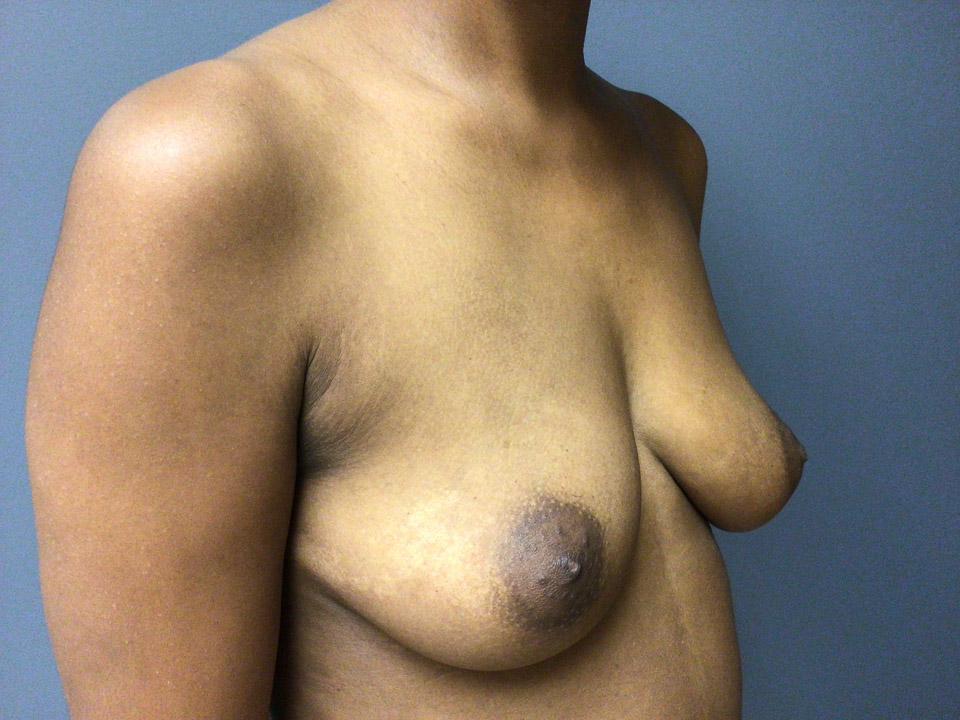
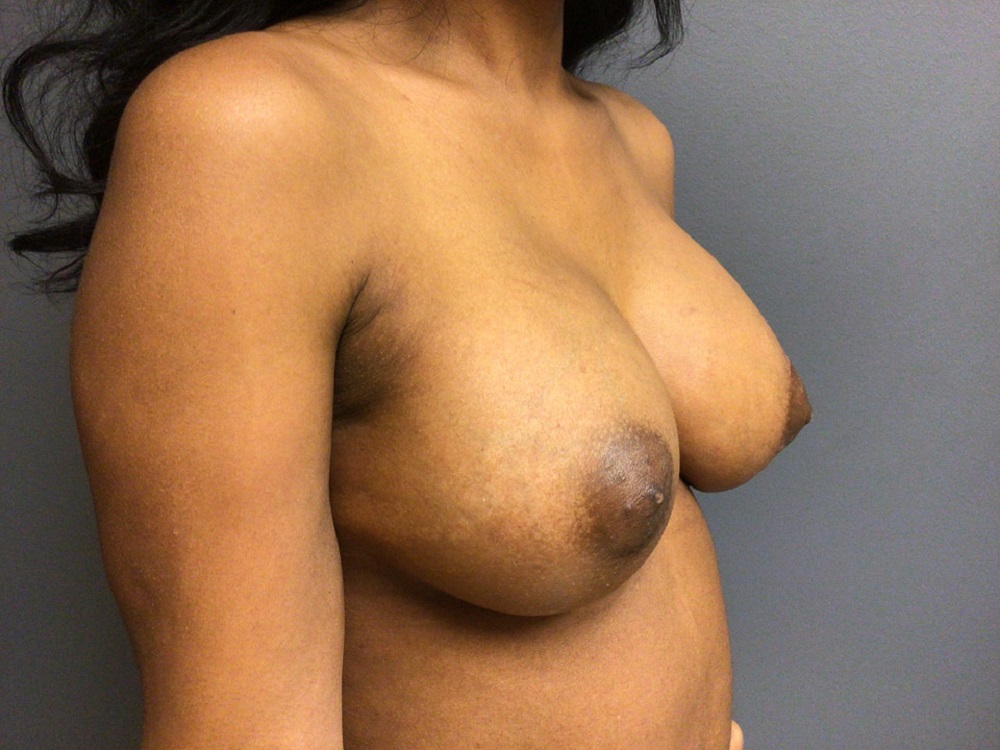
Individual results vary. These photographs show outcomes for specific patients and are not a guarantee of any particular result.
Noticeable sagging, such as nipples pointing downward or sitting below the breast crease, combined with a wish for more volume or upper pole fullness usually points to both procedures. Dr. Hardaway makes that determination at consultation.
It depends on the specifics of your procedure, and typically takes two to four hours. You receive a more precise estimate at your consultation.
Most patients take one to two weeks off work and resume light activities after a few days. Strenuous exercise is avoided for four to six weeks. Final results are typically seen around three to six months, as swelling resolves and the implants settle.
Yes, some scarring is unavoidable. Scars typically fade significantly over 12 to 18 months and can be placed where clothing or swimwear conceals them.
Results can last many years, though natural aging, weight fluctuation and gravity continue to affect the breasts. Implants are not lifetime devices and will likely need replacing at some point; modern implants typically last 10 to 20 years. They are monitored at follow-up appointments.
Many women can, but it depends on the surgical technique used. If breastfeeding matters to you, raise it with Dr. Hardaway at your consultation.
Dr. Hardaway helps you select a size that suits your body frame and goals, taking into account the limits of your existing breast tissue and skin elasticity. Several sizing methods are used at consultation to help you visualize potential results.
Silicone implants are pre-filled with gel, while saline implants are filled with sterile saltwater after insertion. Silicone tends to feel more natural, and saline is often less expensive.
We do not accept insurance. However, we can work with you to create a customized payment plan that fits your budget and makes achieving your goals possible.
Yes. All consultations are paid and appointment-based to ensure dedicated time and a personalized plan.
Whether breast augmentation with lift suits you is decided after an examination and a review of your history. All consultations are paid and appointment-based to ensure dedicated time and a personalized plan.
Not ready to book? See patient results or read the blog first.
Dr. Hardaway sees every consultation personally. You will have time to ask what you came to ask.
Prefer to talk now? (248) 780-0558
Submitting a request does not create a physician-patient relationship and does not confirm an appointment. A member of the team will be in touch to arrange one.