General · Oct 13, 2026
What Is a Good Age for Breast Reduction in Farmington Hills?
Breast reduction can be performed at any age. Learn what shapes the best age for breast reduction in Farmington Hills. Call (248) 780-0558.
Read article
The most common fear among patients considering plastic surgery isn't pain, cost, or recovery time. It's this: What if I don't look like myself anymore?
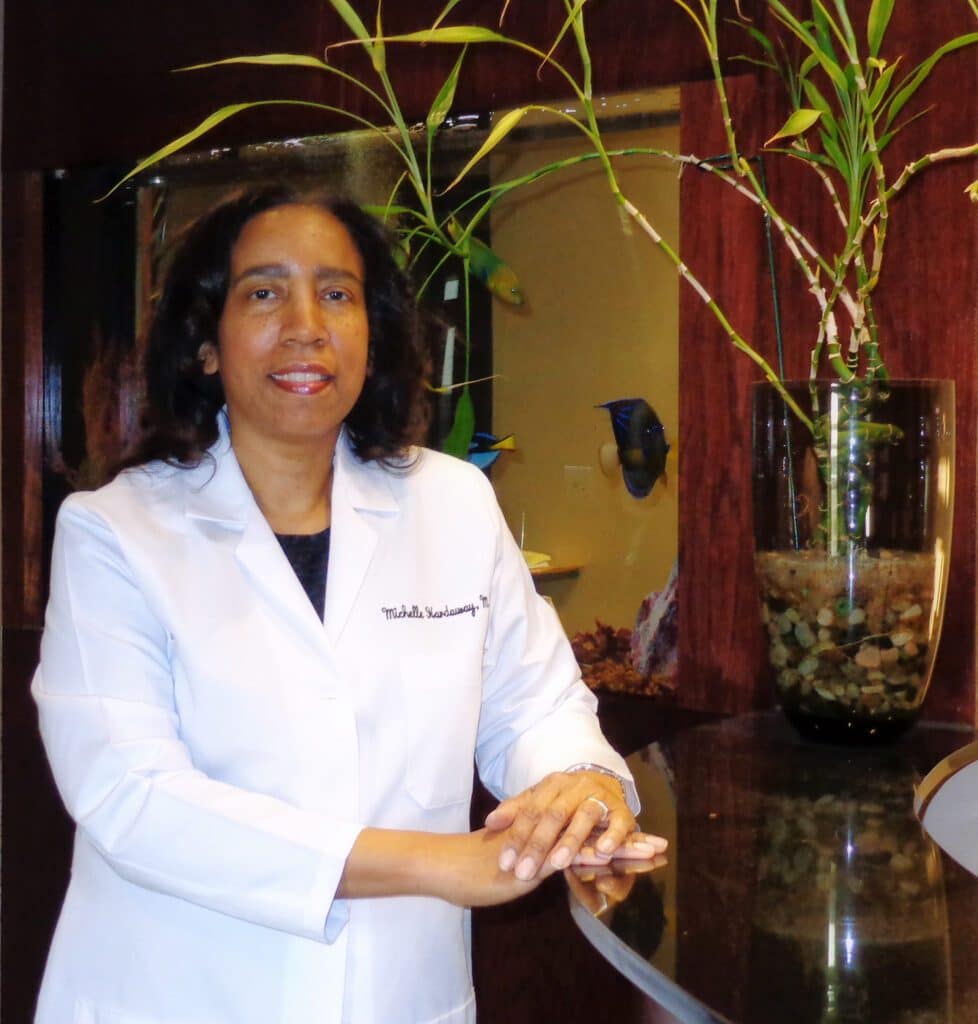 Dr. Michelle Hardaway, M.D., F.A.C.S.

Written by Dr. Michelle Hardaway, M.D., F.A.C.S. | Board-Certified Plastic Surgeon, Fellow of the American College of Surgeons, Assistant Clinical Professor at Wayne State University School of Medicine
The most common fear among patients considering plastic surgery isn’t pain, cost, or recovery time. It’s this: What if I don’t look like myself anymore?
That fear is completely valid — and it’s exactly the right question to ask before choosing a surgeon. The truth is, natural-looking results are not an accident. They are the direct outcome of surgical experience, anatomical respect, and a conservative philosophy that prioritizes your features over any trend.
At Aesthetic Plastic Surgery & Laser Center, Dr. Michelle Hardaway has spent over 20 years of experience refining a single standard: results that enhance who you already are. This guide explains exactly how that standard is achieved — and what to look for when evaluating any surgeon who claims the same.
“Natural results” is one of the most overused phrases in cosmetic medicine. But it has a precise clinical meaning — and it starts with anatomy.
A natural outcome means the surgical result respects the patient’s individual bone structure, skin quality, tissue volume, and proportional relationships. It means a facelift that lifts sagging tissue without distorting the hairline or pulling the corners of the eyes. It means a breast augmentation sized to complement your frame, not to maximize volume for its own sake.
The opposite of a natural result isn’t just an “overdone” look. It’s a result that draws attention to the surgery itself — the telltale tightness, the frozen expression, the disproportionate silhouette that signals something artificial. Avoiding that outcome requires a surgeon who views restraint as a skill, not a limitation.
Dr. Hardaway’s philosophy is built on one principle: enhancement, not alteration. The goal is always a refreshed, confident version of you — not a different person.
Experience in plastic surgery is not simply a matter of years. It’s a matter of the breadth and complexity of cases a surgeon has managed — and the clinical judgment that develops from that depth.
Dr. Hardaway is board-certified in both Plastic Surgery and General Surgery, a Fellow of the American College of Surgeons, and an Assistant Clinical Professor at Wayne State University School of Medicine. She served as former Chief of Plastic Surgery and Burn Center Director at Detroit Receiving Hospital, a Level I trauma center where the margin for error is zero.
That background matters for cosmetic patients because it means Dr. Hardaway’s conservative surgical approach was forged in high-stakes environments, not just elective procedure suites. She understands tissue behavior, healing, and complication management at a level that goes well beyond standard cosmetic training.
Over 20 years of experience also means a refined eye for proportion. Experienced surgeons typically recognize early in a consultation when a patient’s expectations may need gentle recalibration — and they have the confidence to have that honest conversation. That kind of surgical restraint is, paradoxically, one of the most powerful tools for achieving a beautiful, natural result.
When you choose to have surgery in an accredited facility, you are choosing a measurable, independently verified standard of safety — not a promise on a website.
QUAD A (The American Association for Accreditation of Ambulatory Surgery Facilities) accreditation requires a facility to meet rigorous standards across patient safety protocols, equipment maintenance, staff credentialing, emergency preparedness, and infection control. These standards are inspected and re-certified on a regular cycle.
Dr. Hardaway’s onsite surgical center holds QUAD A accreditation. This means your procedure takes place in a controlled, hospital-grade environment with a Certified Registered Nurse Anesthetist (CRNA) on-site — not a converted treatment room. For patients evaluating the safety of any cosmetic procedure, this distinction is one of the clearest signs of a high-quality practice.
Many cosmetic clinics perform surgical procedures in facilities that lack any independent accreditation. When researching surgeons, asking “Is your surgical facility accredited — and by whom?” is one of the most important questions you can ask. For a deeper look at what our facility standards mean for your care, visit our QUAD A accredited surgery center page.
Generic surgical templates produce generic results. Natural-looking outcomes require a personalized treatment plan built around your specific anatomy — your skin laxity, your tissue volume, your skeletal structure, your healing profile.
For facial rejuvenation, this means using conservative facelift techniques that reposition the deeper tissue layers (the SMAS — superficial musculoaponeurotic system) rather than simply pulling skin taut. Skin-only tightening is what creates the “windblown” look many patients fear. Addressing the underlying structural layer allows for a lifted, rested appearance that moves naturally with your face.
For body contouring, including mommy makeover natural results, the approach centers on restoring what pregnancy and weight changes have altered — not sculpting an idealized body type. The goal is for you to feel like yourself again, not to conform to a trend.
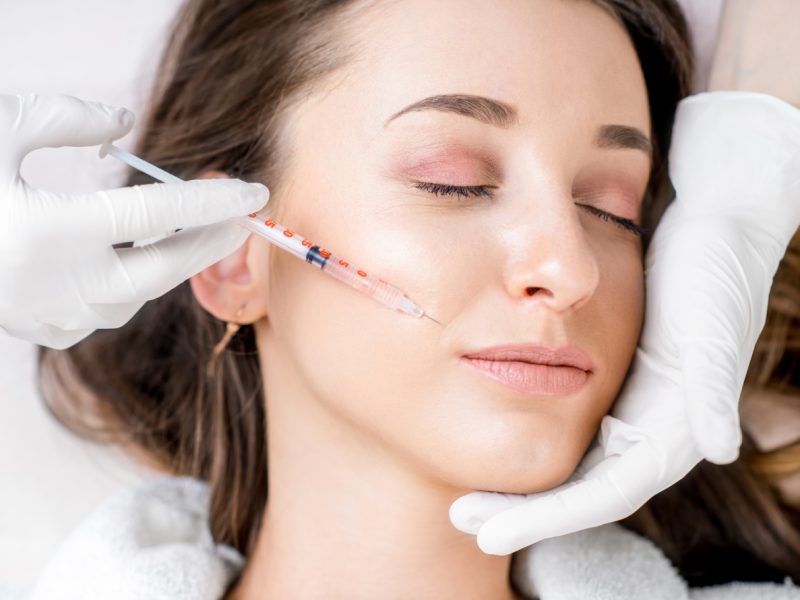
For injectables and non-surgical treatments, conservative dosing and placement are everything. A board-certified plastic surgeon’s oversight of injectable treatments provides a level of anatomical precision that goes beyond what is typically available at standard medspas.
The common thread across all of these approaches is this: the surgery serves your anatomy. Your anatomy does not serve the surgery.
This is one of the most common concerns patients bring to a consultation — and it is entirely reasonable to want to set clear expectations before any procedure begins.
Here are a few practical ways to approach that conversation:
At this practice, that conversation happens in a paid consultation designed to give you the time and information you need to make a confident, unhurried decision. We do not accept insurance for cosmetic procedures, and a consultation fee applies — a structure that ensures every appointment receives the focused, individualized attention it deserves.
Yes — revision surgery is possible in many cases, though outcomes vary depending on the nature of the original procedure, the amount of tissue that was altered, and how much time has elapsed. Revision cases are among the most technically demanding in plastic surgery, and they require a surgeon with significant reconstructive experience.
Dr. Hardaway’s background includes complex reconstructive cases from her tenure at a Level I trauma center, which informs her ability to assess and address revision needs with precision. If you are researching correction options after a procedure elsewhere, a thorough evaluation is essential before any plan is made.
It is worth noting that revision consultations are among the most detailed assessments in this practice. A consultation fee applies, reflecting the complexity of the evaluation. The goal in any revision case is the same as in primary surgery: a result that looks like you — only rested, confident, and at your best.
When evaluating any practice, these are the markers that typically distinguish a credentialed, safety-forward surgeon from a trend-driven provider:
According to the American Board of Plastic Surgery, board certification requires completion of an accredited residency program, a minimum number of supervised surgical cases, and passage of comprehensive written and oral examinations — standards that are not required to use the title “cosmetic surgeon” in many states.
You’ve done the research. Now let’s have a real conversation.
If you’ve read this far, you’re exactly the kind of patient this practice was built for — someone who takes their health seriously, values experience over hype, and wants results that feel authentically theirs.
The next step is a paid consultation with Dr. Hardaway. This is a focused, one-on-one appointment where your anatomy, your goals, and your concerns are evaluated with the full attention of a board-certified plastic surgeon with over 20 years of experience.
There is no pressure, no sales pitch, and no shortcuts. Just an honest, expert assessment of what’s possible — and what’s right for you.
We do not accept insurance for cosmetic procedures. A consultation fee applies. Financing options are available for qualified patients through CareCredit.
Breast reduction can be performed at any age. Learn what shapes the best age for breast reduction in Farmington Hills. Call (248) 780-0558.
Read articleYour belly protrudes where your fascia stretched. That is the answer most patients have been waiting years to hear, and it is rarely explained with the precision it…
Read articleYou've probably seen the ads. A med spa in a strip mall near your gym, Instagram-polished and offering Botox for less than you expected. Maybe you've already booked…
Read articleBring it to a consultation. All consultations are paid and appointment-based to ensure dedicated time and a personalized plan.
Not ready to book? See patient results or read the blog first.
Dr. Hardaway sees every consultation personally. You will have time to ask what you came to ask.
Prefer to talk now? (248) 780-0558
Submitting a request does not create a physician-patient relationship and does not confirm an appointment. A member of the team will be in touch to arrange one.