Key takeaways
- Preparation: arrive at a stable weight, stop smoking or vaping, and line up someone to drive you home and stay with you at least the first night.
- Rest: plan on about a week of taking it easy and roughly two to four weeks before returning to work, depending on your job.
- Restrictions: no heavy lifting, strenuous exercise or overstretching your arms for several weeks, until your surgeon clears you.
- Expectations: swelling takes months to resolve, scars are permanent but fade, and nipple sensation can change for a while.
- Size: there is no standard number of pounds removed; most patients go down one to three cup sizes.
This content is for general informational purposes only and should not be taken as medical or other professional advice. Readers should consult a qualified licensed professional for advice about their specific situation. Reading this page does not create a physician-patient relationship. All surgery carries risk, and individual results vary. Seek immediate emergency care for severe or urgent symptoms.
Last Updated: November 28, 2026
Table of Contents
What Questions to Ask for a Breast Reduction Surgery?
Ask your surgeon about their board certification, where the surgery will be done and whether that facility is accredited, which incision technique suits you, what recovery and help at home will look like, the risks for your body, and what result is realistic. Seeing before-and-after photos of similar patients helps set expectations.
The American Society of Plastic Surgeons (ASPS) publishes a full consultation checklist for breast reduction. Its questions include:
- Are you certified by the American Board of Plastic Surgery?
- Is the office-based surgical facility accredited?
- Am I a good candidate for this procedure?
- What surgical technique is recommended for me?
- How long of a recovery period can I expect, and what kind of help will I need during my recovery?
- How are complications handled?
- What are my options if I am dissatisfied with the outcome?
Ask what your quote includes as well. At this practice the quote covers the surgeon, facility, anesthesia, pre-op testing, garments and follow-up care, and this guide to breast reduction cost explains how the total is built.
Dr. Hardaway is certified by the American Board of Plastic Surgery and operates in a QUAD A accredited surgical suite, so you can check those answers before your visit and spend your consultation on the questions about your own body.
Should I Lose Weight Before or After Breast Reduction Surgery?
If you plan to lose a significant amount of weight, it is usually better to do it before breast reduction surgery. Breasts often shrink with weight loss, and a big change after surgery can alter the size and shape you chose. Surgeons generally prefer that you reach a stable weight you can maintain first.
MedlinePlus notes that weight loss is one of the non-surgical steps that can help some people with very large breasts. Being at a stable weight is also one of the practice’s candidacy criteria on its breast reduction page in Farmington Hills, because significant weight fluctuation can affect your result.
That does not mean you must reach a goal weight first. If you have been at a steady weight for a while and your breasts still cause pain, rashes or bra-strap grooves, waiting for a number on the scale may not change much. Dr. Hardaway can talk through your weight history and plans at your consultation.
How Many Pounds Does a Breast Reduction Take Off?
There is no standard number of pounds a breast reduction takes off, because the amount depends on your starting size, your frame and your goals. Most patients reduce by one to three cup sizes. The amount of tissue removed is agreed with your surgeon at consultation so your new size suits your body.
Cup sizes are not a precise target. Bra sizing varies between brands, and surgeons work within your natural breast footprint, so many patients find it more useful to talk about proportion and relief from symptoms than about a specific letter.
The operation also lifts the breast. Excess tissue and skin are removed, the remaining tissue is reshaped and the nipple is moved higher, which is why the result often looks perkier as well as smaller.
Do You Look Skinnier After a Breast Reduction?
Many people look slimmer and more in proportion after a breast reduction, mainly because clothes fit and hang differently once the chest is smaller. The scale usually changes only a little, since breast tissue is a small share of body weight. The difference is in proportion more than in pounds.
Some patients are surprised that their midsection looks more noticeable at first, because large breasts had been hiding it. That is a change in what you see, not weight gain, and it is worth knowing before surgery so it does not catch you off guard.
Your shape also keeps changing for months. Swelling makes the breasts look fuller, higher or boxier in the early weeks, and the practice notes that the final result shows at three to six months.
How Many Days Should I Rest After Breast Surgery?
Plan to rest for about a week after breast reduction, with the first one to three days the most limited. Most people need at least a week off work or school, and some need two to four weeks depending on their job. Light walking around the house is encouraged from the start.
Cleveland Clinic advises taking at least one week off from work or school and notes that some people need two. An ASPS member surgeon writing on the ASPS blog goes further, suggesting you plan three weeks off and simply rest and recover during the first week.
At this practice, light activity usually resumes within one to two weeks and a return to work comes at two to four weeks, depending on how physical your job is. Your first follow-up visit falls within the first week. Many people also feel tired or a little low for a while after surgery, which is common and usually passes as you heal.
Can I Be Alone After Breast Reduction Surgery?
No, you should not be alone right after breast reduction surgery. You need someone to drive you home and a responsible adult to stay with you at least the first night, and ideally for the first day or two. After that, many people manage alone, though help with chores and lifting is still useful.
Cleveland Clinic advises having someone stay with you at least the first night after breast reduction. The practice gives the same instruction: after a brief recovery period at the facility you return home, and a responsible adult should stay with you for the first 24 to 48 hours.
Help matters beyond the first night. Reaching overhead, lifting a laundry basket or getting a child out of a car seat is hard in the first weeks, so arrange support for those tasks before surgery. The guide to healthy habits before plastic surgery covers other steps to take in the weeks beforehand.
How Long After Breast Reduction Can I Shower?
Many surgeons allow a shower about two days after breast reduction, once any drainage tubes are out, but the timing depends on your dressings and your surgeon’s instructions. Baths, hot tubs and swimming wait longer, usually until your incisions have healed and your surgeon says it is safe to soak.
MedlinePlus discharge instructions for cosmetic breast surgery say you may shower after two days if your drainage tubes have been removed, and that you should not take baths, use a hot tub or swim until stitches and drains are out and your surgeon approves.
Not every surgeon uses drains, and dressing plans differ, so ask at your pre-operative visit exactly when you can shower, how to keep the incisions dry beforehand and whether you can wash your hair at the sink. A handheld shower head makes the first few showers easier when lifting your arms is uncomfortable.
What Are the Weight Restrictions After Breast Reduction Surgery?
After breast reduction, expect to avoid heavy lifting, strenuous exercise and overstretching your arms for three to six weeks. Many surgeons also give a specific pound limit for the early weeks, so ask for yours. Strenuous exercise usually waits at least a month, until your surgeon clears you.
For cosmetic breast surgery in general, MedlinePlus puts that window at three to six weeks and adds no driving for at least two weeks, or while you take narcotic pain medicine. ASPS adds that incisions should not be subjected to excessive force, swelling, abrasion or motion while they heal.
At this practice, exercise returns at four to six weeks once you are cleared, and you move from the surgical bra to a supportive sports bra during weeks two to six. Your exact lifting limit is given in your written aftercare instructions.
Frequently Asked Questions
How long do I have to sleep upright after breast surgery?
Many surgeons ask you to sleep on your back, often slightly propped up, for the first few weeks. An ASPS member surgeon says to expect at least two to three weeks on your back after a reduction, and a body pillow or recliner can help if you usually sleep on your side.
Does your stomach look bigger after breast reduction?
Your stomach does not grow after a breast reduction. With a smaller chest above it, the abdomen can stand out more in the mirror for a while, and most people get used to their new proportions once swelling settles.
What’s the best age for breast reduction?
There is no single best age, but the practice generally looks for fully developed breasts, usually after 18, and a stable weight. This guide to the best age for breast reduction covers timing around pregnancy and later life.
Is DD big enough for breast reduction?
Cup size alone does not decide candidacy. ASPS describes good candidates as people whose breasts feel too large for their frame or cause neck, back or shoulder pain, bra-strap grooves or rashes, so a DD can qualify if it causes those problems.
To talk through your own questions, book a paid consultation at 27920 Orchard Lake Rd in Farmington Hills, convenient for patients across Metro Detroit. Board-certified plastic surgeon Dr. Hardaway reviews your symptoms, measurements and health history, explains the technique she recommends and walks you through recovery so you know what to expect at home. All consultations are paid and appointment-based to ensure dedicated time and a personalized plan.
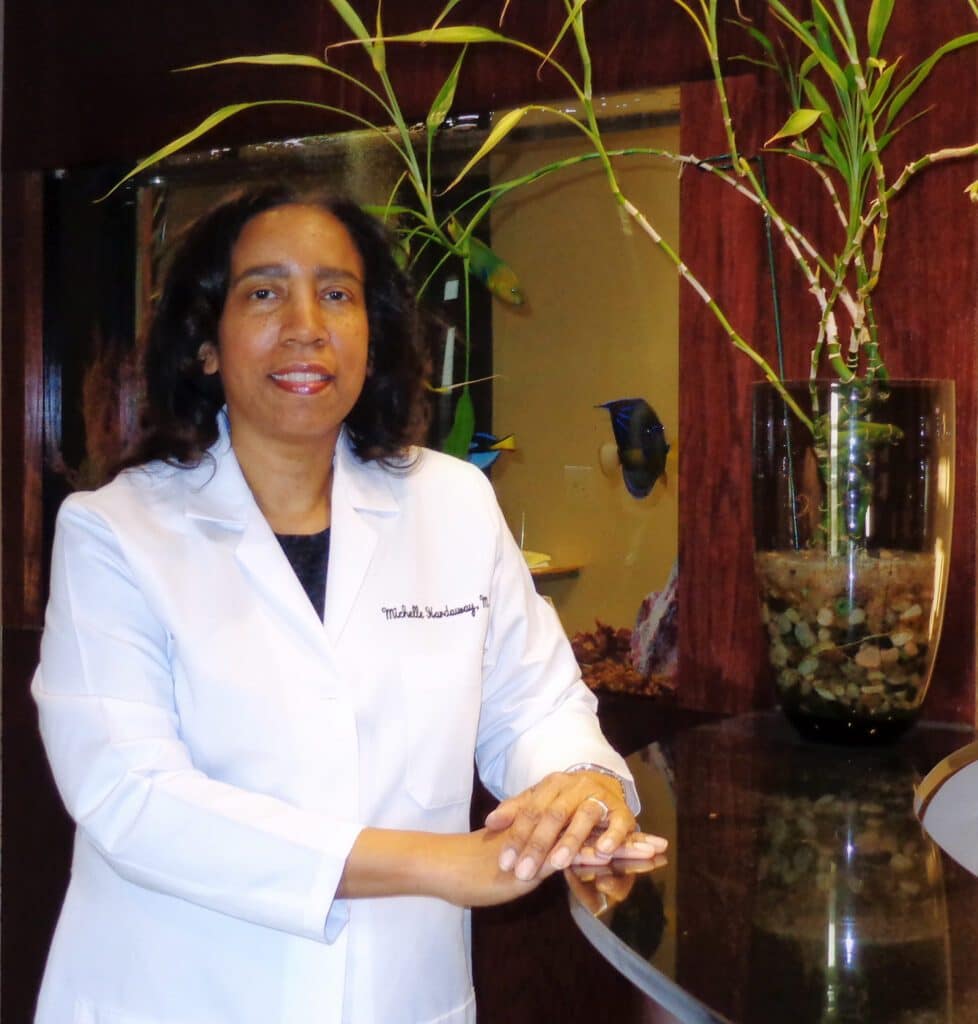
Written by Michelle Hardaway, M.D., F.A.C.S., Board-Certified Plastic Surgeon
Dr. Michelle Hardaway is a board-certified plastic surgeon and Fellow of the American College of Surgeons with over 20 years of experience. A former Chief of Plastic and Reconstructive Surgery at Detroit Receiving Hospital and an Assistant Clinical Professor of Surgery at Wayne State University School of Medicine, she performs every procedure personally at her QUAD A accredited practice in Farmington Hills.