Key takeaways
- No zero-risk surgery: in a database of 129,007 cosmetic surgery patients, about 2% had a major complication within 30 days.
- Most common: major hematoma, a collection of blood that needs treatment, affected 0.91% of patients.
- Higher-risk procedures: abdominoplasty had a 4.0% complication rate, and gluteal fat grafting has had the highest reported mortality of any aesthetic procedure.
- Risk factors: combined procedures, a higher BMI and older age raised the risk in large studies, and smoking raised the risk of infection.
- Setting: one accredited outpatient center reported a 0.74% complication rate across 42,720 cases over nearly 30 years.
This content is for general informational purposes only and should not be taken as medical or other professional advice. Readers should consult a qualified licensed professional for advice about their specific situation. Reading this page does not create a physician-patient relationship. All surgery carries risk, and individual results vary. Seek immediate emergency care for severe or urgent symptoms.
Last Updated: November 28, 2026
Some of the questions people ask next, about the riskiest or worst surgeries, have no official answer. This guide answers them with published plastic surgery research and explains what pushes risk up or down, so you can weigh any procedure with clear eyes.
Table of Contents
Is Plastic Surgery Very Risky?
Plastic surgery is not very risky for most healthy patients, but it is real surgery with real risks. In the CosmetAssure database of 129,007 cosmetic surgery patients, about 2% had a major complication, meaning an emergency room visit, hospital admission or another operation within 30 days. The risk rises with certain procedures and health factors.
A 2019 analysis of that database found major complications in 2.0% of smokers and 1.9% of nonsmokers. The single most common problem was major hematoma, which affected 0.91% of patients in a separate analysis; men and people having breast or combined procedures were more likely to develop one.
Weight matters too. In a study of 127,961 patients, the complication rate climbed steadily with BMI, from 1.6% at a BMI of 18.5 to 24.9 to 4.2% at a BMI of 40 or higher. Being overweight or obese independently raised the risk of infection and of blood clots.
What Are the Top 3 Riskiest Surgeries?
Among cosmetic procedures, published data point to three higher-risk groups: the Brazilian butt lift, or gluteal fat grafting, because of fat embolism; abdominoplasty, or tummy tuck, because of higher complication and blood clot rates; and lower body lifts and other combined body contouring operations, because longer, larger surgeries raise complication rates.
- BBL: the 2017 ASERF Task Force reported that significantly higher mortality rates appear to be associated with gluteal fat grafting than with any other aesthetic surgical procedure. A 2020 follow-up survey showed a trend toward lower mortality, from about 1 in 3,448 to 1 in 14,952, after surgeons adopted safer techniques. The practice’s guide on whether BBLs are safer now explains those changes.
- Abdominoplasty: in a study of 25,478 abdominoplasties, the complication rate was 4.0%, compared with 1.4% for other aesthetic procedures; hematoma, infection and blood clots made up most of the complications. A review of outpatient surgery deaths, described below, named abdominoplasty as the procedure most commonly linked to death from pulmonary embolism in office-based facilities.
- Lower body lift and combined body contouring: complications reached 8.8% after lower body lift in overweight patients, and 10.4% when abdominoplasty was combined with liposuction and another body contouring procedure.
What Is the Riskiest Surgery Ever?
No official list names the riskiest surgery ever, and risk depends as much on the patient and the situation as on the operation. Emergency operations on very sick patients carry far more risk than planned cosmetic surgery: emergency general surgery accounts for about 11% of surgical admissions but half of all surgical deaths in the United States.
A 2016 JAMA Surgery study of emergency general surgery found an in-hospital mortality rate of 1.23% and a complication rate of 15.0%. Seven procedures, including partial colectomy, small-bowel resection and emergency laparotomy, accounted for 80.3% of those deaths. The ranking reflects how often each operation is performed as well as how risky it is, which is why common procedures such as appendectomy also appear.
Within cosmetic surgery, gluteal fat grafting has carried the highest reported mortality, as described above. A planned, elective procedure also gives you something an emergency does not: time to improve your health, choose your surgeon and facility, and decide not to go ahead.
What Surgery Has the Lowest Death Rate?
No surgery is officially ranked as having the lowest death rate, but short, planned outpatient procedures in healthy patients sit at the low end. In accredited outpatient facilities, one review counted 23 deaths in 1,141,418 procedures, roughly 1 in 50,000, and most were caused by blood clots in the lungs rather than by the operation itself.
In that review of AAAASF-accredited facilities, pulmonary embolism caused 13 of the 23 deaths, and only one death resulted from an event during the operation. Among cosmetic procedures, low major complication rates have been reported for rhinoplasty, at 0.7%, and for liposuction performed alone, also at 0.7%.
A 2025 review of 42,720 consecutive cases by board-certified plastic surgeons at an accredited outpatient center reported an overall complication rate of 0.74% over nearly 30 years. Combined procedures were the strongest predictor of blood clots and of hospital admission.
What Is the Most Failed Surgery?
There is no agreed definition of a failed surgery, so no procedure can fairly be named the most failed. In cosmetic surgery, the closest measures are revision and removal rates. Breast implants are the clearest example because they are devices: in a five-year study, 4% to 6.4% of primary augmentation patients had their implants removed.
In that five-year GLOW study, implant-related reoperation rates for primary augmentation ranged from 2.9% to 5.49% depending on the implant, and satisfaction on the BREAST-Q questionnaire still improved significantly from baseline. Revision also happens after procedures without implants: in a five-year liposuction study, 8.7% of patients had revision surgery.
A revision is not always a failure. Some patients choose a change years later because their body or preferences have changed, and some revisions fine-tune a result. Ask any surgeon you consult how often their patients need revisions and how those are handled.
What Are the Five Worst Surgeries to Have?
No medical organization ranks the five worst surgeries to have. What research does show is which situations make an operation riskier, and five stand out in cosmetic surgery: combining several procedures, a higher BMI, smoking, older age, and treatment by someone without plastic surgery training or with unapproved products.
- Combined procedures: in the liposuction study, combining liposuction with other operations was the strongest predictor of major complications, with a relative risk of 4.81.
- Higher BMI: complication rates rose from 1.6% to 4.2% across BMI groups.
- Smoking: smoking independently raised the risk of surgical site infection, and smokers had much higher complication rates after thigh lifts (23.8% versus 3.6%).
- Older age: patients aged 40 or older had about twice the relative risk of a major complication after rhinoplasty.
- Unqualified providers and unapproved products: ASPS says its member surgeons have more than six years of surgical training, at least three of them in plastic surgery, and the FDA warns that injectable silicone is not approved for any aesthetic procedure.
The first four are factors you and your surgeon can plan around. The fifth is entirely in your hands. This guide explains the difference between a plastic surgeon and a cosmetic surgeon and why board certification matters.
You can book a paid consultation with board-certified plastic surgeon Dr. Michelle Hardaway at 27920 Orchard Lake Rd in Farmington Hills, convenient for patients across Metro Detroit. The consultation reviews your health history and personal risk factors, so you can weigh the realistic benefits of a procedure against its risks before you decide.
Surgery takes place at her QUAD A accredited surgical center on Orchard Lake Road, and a Certified Registered Nurse Anesthetist (CRNA) manages anesthesia for every surgical case. Not every patient is a good candidate for every procedure, and an honest “no” is part of safe care. You can compare options on the practice’s surgical procedures page.
All consultations are paid and appointment-based to ensure dedicated time and a personalized plan. You can contact the office online to request one.
Frequently Asked Questions
Are blood clots a risk after cosmetic surgery?
Yes. Pulmonary embolism caused more than half of the deaths in the outpatient review, and combining procedures raised the risk of confirmed blood clots in the liposuction study. Walking soon after surgery, as your surgeon directs, is one of the simplest ways to lower the risk.
Can you lower your own risk before surgery?
Yes. Stop smoking, reach a stable and healthy weight, share every medicine and supplement you take, and ask whether combining procedures is wise for you. ASPS also advises avoiding smoking and alcohol for at least three months after a tummy tuck.
Does an accredited facility make surgery safer?
Accreditation is one of the safety checks to make before surgery, along with your surgeon’s board certification. In the studies above, accredited outpatient settings reported low complication rates, such as 0.74% across 42,720 cases.
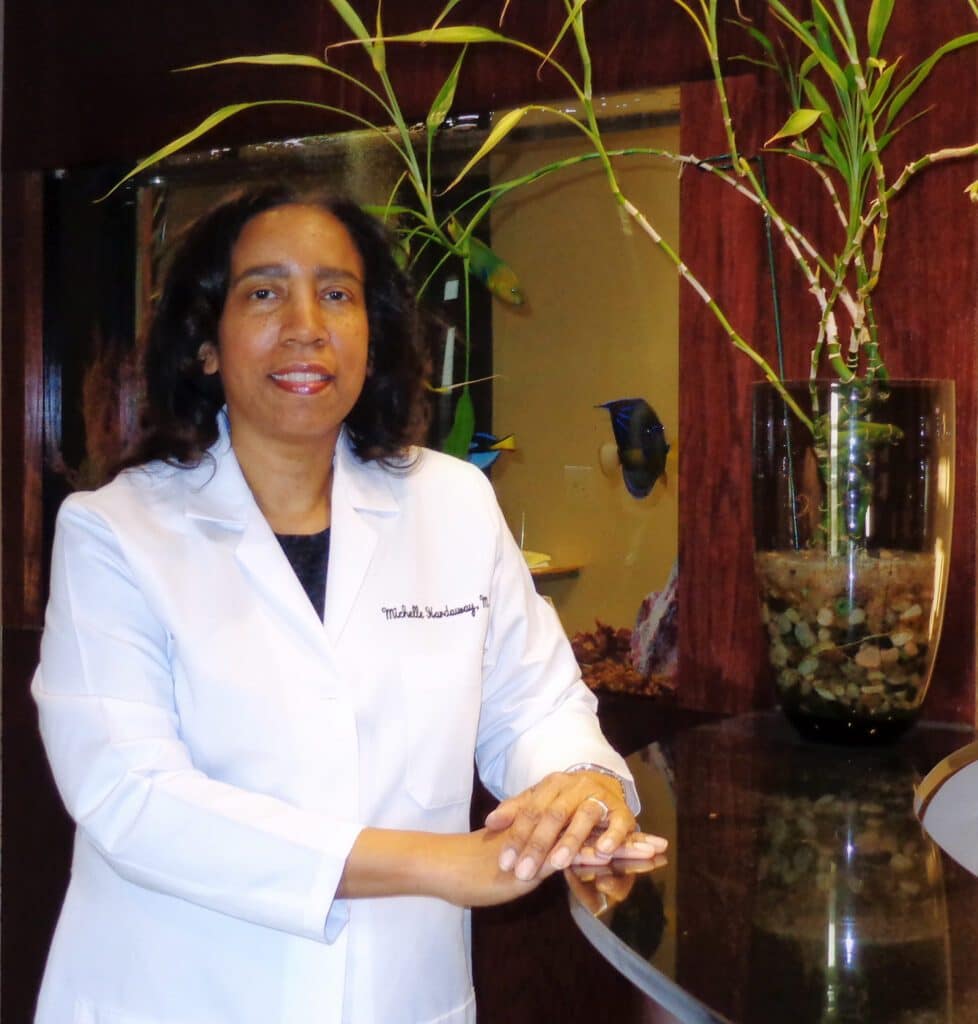
Written by Michelle Hardaway, M.D., F.A.C.S., Board-Certified Plastic Surgeon
Dr. Michelle Hardaway is a board-certified plastic surgeon and Fellow of the American College of Surgeons with over 20 years of experience. A former Chief of Plastic and Reconstructive Surgery at Detroit Receiving Hospital and an Assistant Clinical Professor of Surgery at Wayne State University School of Medicine, she performs every procedure personally at her QUAD A accredited practice in Farmington Hills.