General · Oct 13, 2026
What Is a Good Age for Breast Reduction in Farmington Hills?
Breast reduction can be performed at any age. Learn what shapes the best age for breast reduction in Farmington Hills. Call (248) 780-0558.
Read article
The Brazilian Butt Lift has one of the highest mortality rates of any elective cosmetic procedure performed today. According to a joint safety advisory from the American Society…
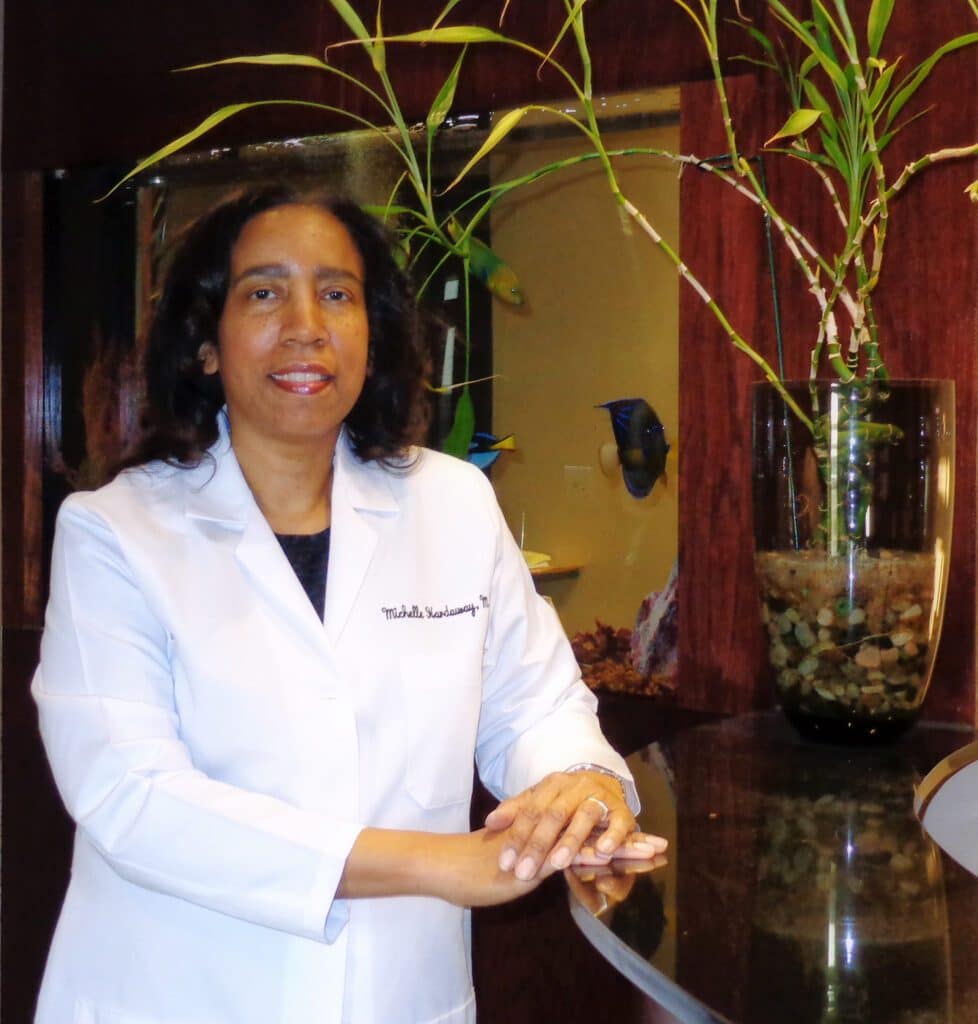 Dr. Michelle Hardaway, M.D., F.A.C.S.

Reviewed by Michelle Hardaway, M.D., F.A.C.S., Board-Certified Plastic Surgeon
Aesthetic Plastic Surgery & Laser Center | Farmington Hills, Michigan
The Brazilian Butt Lift has one of the highest mortality rates of any elective cosmetic procedure performed today. According to a joint safety advisory from the American Society of Plastic Surgeons and the American Society for Aesthetic Plastic Surgery, early fatality estimates reached as high as 1 in 3,000 cases, a figure that prompted a fundamental rethinking of how this surgery should be performed.
That number has improved significantly as the field has adopted stricter protocols. The most consequential of those changes is the use of real-time ultrasound guidance during fat injection. If you are researching BBL surgery in Michigan and safety is your primary concern, understanding exactly how this technology works and what to demand from any surgeon you consider, may be the most important research you do.
The risk is anatomical, and it is very specific. The gluteal region contains a network of large, deep blood vessels —including the inferior and superior gluteal veins— that run through and beneath the gluteal muscle. When fat is injected into or below the muscle layer (the intramuscular or sub-muscular plane), there is a meaningful risk that fat particles enter those vessels and travel to the lungs, causing a pulmonary fat embolism. This condition can be rapidly fatal.
The danger is not inherent to fat transfer as a concept. It is a direct consequence of where the fat is placed. Fat injected above the muscle —into the subcutaneous layer— does not carry the same vascular risk profile. The challenge has always been maintaining that boundary with precision during a live surgical procedure, in tissue that shifts with every movement.
This is the problem that ultrasound guidance was developed to solve.
Real-time ultrasound imaging gives the surgeon something that was previously unavailable: the ability to see the cannula tip as fat is being injected, not just feel it.
During a standard BBL, the surgeon relies on tactile feedback and anatomical landmarks to estimate depth. Ultrasound eliminates that uncertainty. A sterile handheld probe is positioned at the operative site, generating a live image of the tissue layers beneath the skin. The surgeon can directly visualize the echogenic (bright, reflective) tip of the cannula and confirm —in real time— that it remains within the subcutaneous fat plane, well above the deep gluteal fascia.
If the cannula begins to migrate toward the muscle layer, the surgeon sees it immediately and can correct course before any fat is deposited in a dangerous location. This is the technical detail that most BBL marketing materials omit entirely, and it is the one that matters most to your safety.
Fat embolism syndrome occurs when fat enters the venous system. The deep gluteal vessels that carry this risk are located below the gluteal fascia —the fibrous layer that separates the subcutaneous tissue from the muscle. Ultrasound allows the surgeon to identify that fascial boundary with precision and maintain a verifiable safety margin above it throughout the procedure.
In practical terms: the surgeon is not guessing. The imaging confirms, injection by injection, that fat is being placed where it belongs. This approach is supported by the joint task force recommendations from the ASPS and ASAPS, which identified intramuscular injection as the primary driver of BBL fatalities and advocated for ultrasound adoption as a critical safety measure.
This is a question worth asking, because it connects safety to results. When fat is deposited in the correct subcutaneous plane using controlled, image-guided technique, those fat cells are placed in tissue with an established blood supply. Adequate vascularization is what allows transferred fat cells (adipocytes) to survive and integrate long-term.
Imprecise injection —whether too deep, too superficial, or in large, uncontrolled boluses— compromises graft survival. Ultrasound-guided technique supports more consistent, anatomically appropriate placement, which may contribute to more durable, natural-looking contours over time. It also reduces the temptation to over-inject volume to compensate for anticipated loss, which is itself a safety risk.
Patient selection is where safety begins, long before the operating room. At Aesthetic Plastic Surgery & Laser Center, the consultation process is thorough and unhurried and not every patient who inquires about a BBL will be cleared to have one.
Several factors are evaluated carefully:
Turning away a patient who is not a safe candidate is not a failure of care. It is the care. In our Michigan practice, we would rather have that honest conversation than proceed with a procedure that puts someone’s life at risk.
The credential that matters most is board certification through the American Board of Plastic Surgery (ABPS). This is distinct from other cosmetic surgery boards and reflects training specifically in plastic and reconstructive surgery. Confirming this takes less than two minutes at the ABPS verification tool online —and it should be your first step.
Beyond board certification, look for:
Dr. Hardaway is a member of the American Society of Plastic Surgeons and the American Society for Aesthetic Plastic Surgery, and her practice operates from a QUAD A accredited surgical center on Orchard Lake Road in Farmington Hills —accessible from across Oakland County, West Bloomfield, Novi, and the broader Metro Detroit area.
For many patients who inquire about gluteal enhancement, a BBL is not the only path — and for some, it is not the right one. Depending on your anatomy, goals, and health profile, safer body contouring options near Detroit may produce meaningful, lasting results with a different risk profile.
Liposuction with contouring is often the more appropriate procedure. By strategically removing fat from the waist, flanks, and lower back using traditional liposuction techniques, we can dramatically improve the silhouette and create the visual impression of a lifted, more defined posterior — without any fat transfer to the buttocks at all.
For patients who are not surgical candidates or who prefer a non-invasive approach, non-surgical skin tightening technologies may address laxity and contour concerns with no downtime. These treatments are not a structural replacement for surgery, but they can be a meaningful part of a staged, conservative plan.
The right recommendation depends entirely on your anatomy, your goals, and a thorough clinical evaluation. That conversation is where every plan at our practice begins.
You have done the research. The next step is a real conversation.
If you are considering a BBL — or any form of body contouring — and you want a medically grounded, honest assessment of what is possible and what is safe for your specific situation, we invite you to schedule a thorough consultation with Dr. Hardaway.
All consultations are paid and appointment-based to ensure you receive dedicated time and a fully personalized plan. Dr. Hardaway will review your health history, evaluate your anatomy, explain the procedures that are appropriate for your goals, and be direct with you if a different approach would serve you better.
Breast reduction can be performed at any age. Learn what shapes the best age for breast reduction in Farmington Hills. Call (248) 780-0558.
Read articleYour belly protrudes where your fascia stretched. That is the answer most patients have been waiting years to hear, and it is rarely explained with the precision it…
Read articleYou've probably seen the ads. A med spa in a strip mall near your gym, Instagram-polished and offering Botox for less than you expected. Maybe you've already booked…
Read articleBring it to a consultation. All consultations are paid and appointment-based to ensure dedicated time and a personalized plan.
Not ready to book? See patient results or read the blog first.
Dr. Hardaway sees every consultation personally. You will have time to ask what you came to ask.
Prefer to talk now? (248) 780-0558
Submitting a request does not create a physician-patient relationship and does not confirm an appointment. A member of the team will be in touch to arrange one.