
Body Contouring · Oct 9, 2026
Is a Lower Body Lift Worth It?
Deciding whether a lower body lift is worth it: who it helps, the scars and recovery it asks of you, how long results last, and the questions to ask first.
Read article
If you've lost a great deal of weight, you already know it was one of the hardest things you'll ever do. Being left with loose skin afterward can…
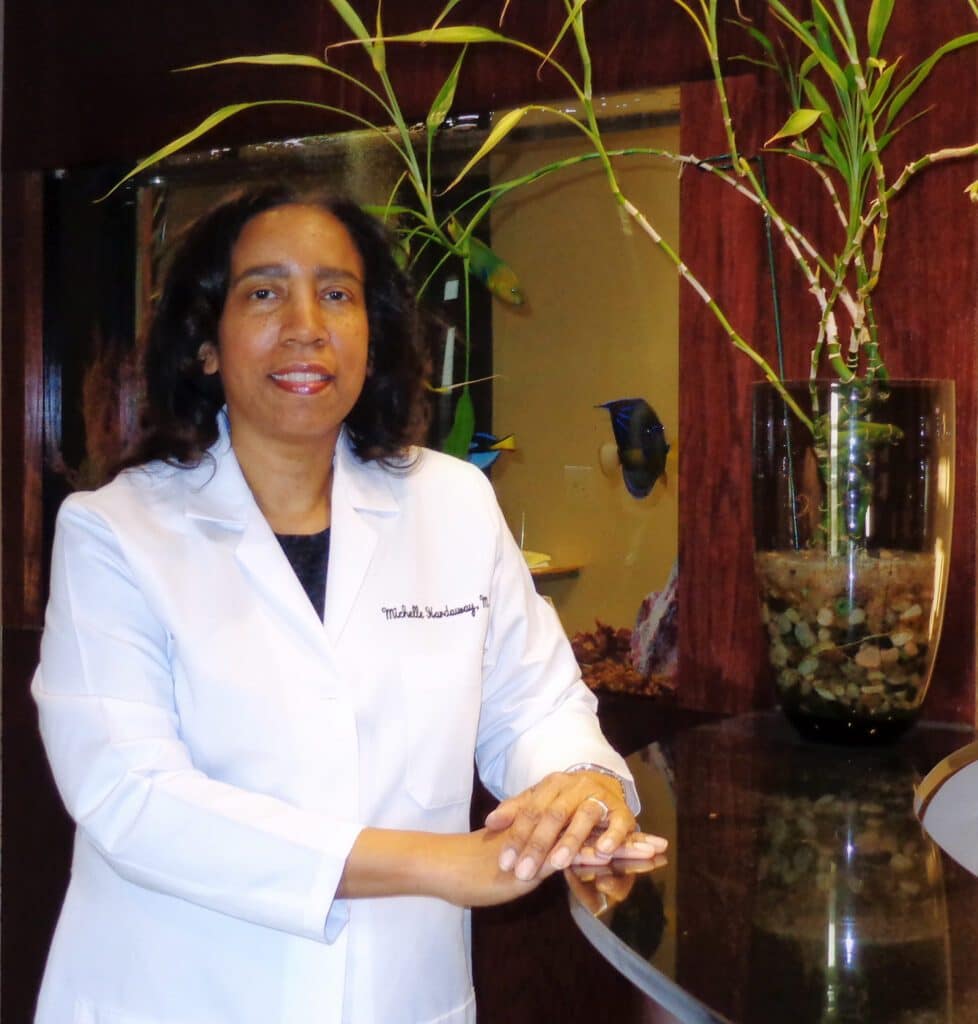 Dr. Michelle Hardaway, M.D., F.A.C.S.

This content is for general informational purposes only and should not be taken as medical or other professional advice. Readers should consult a qualified licensed professional for advice about their specific situation. Reading this page does not create a physician-patient relationship. All surgery carries risk, and individual results vary. Seek immediate emergency care for severe or urgent symptoms.
If you’ve lost a great deal of weight, you already know it was one of the hardest things you’ll ever do. Being left with loose skin afterward can feel like the reward never quite arrived.
Many of our patients come to us after years of feeling self-conscious and then after months of doing everything right and still covering up. If that’s where you are, you’re asking about the last part of a very long project, and there’s nothing frivolous about it.
Here’s what each part of that money pays for, and the honest reason two quotes for what sounds like the same surgery can be thousands apart.
If you’d rather just talk it through, you can request a consultation or send us a question first. Aesthetic Plastic Surgery & Laser Center is at 27920 Orchard Lake Rd, Farmington Hills, MI 48334, where Dr. Michelle Hardaway has over 20 years of experience as a board-certified plastic surgeon. You’re also welcome to call us at (248) 780-0558.
One national number is worth understanding before you compare anything, from the American Society of Plastic Surgeons, which puts the average at $11,397 for a lower body lift. Read it carefully, because two things about it matter more than the figure itself. It’s a surgeon’s fee on its own, and ASPS says plainly that it does not include anesthesia, operating room facilities, or other related expenses. And it describes a lower body lift specifically, which isn’t what every practice means by “full.”
What you actually pay depends on how much surgery you need, which is what the rest of this page is about.
Your total is several separate charges, and knowing the list is what lets you compare two quotes properly:
Because a body lift takes longer than most operations, the charges billed by time carry more weight here than they would on a smaller procedure. That’s also why a staged plan changes the arithmetic so much.
Most of the confusion starts here. ASPS describes body lift surgery as addressing the abdomen, the buttocks and the thigh region, inner, outer, posterior or all the way around. That’s a lot of possible operations under one name.
What we mean by a lower body lift is set out on our body lift page: the abdomen, flanks, back, and outer thighs, in one procedure that travels the whole way around. Upper body work is separate surgery.
So before you compare two quotes, ask each practice for:
A quote that says “full body lift” and nothing more can’t be compared with anything, because you don’t yet know what it describes.
Dr. Hardaway often stages this work, doing a lower body lift first and upper body contouring three to six months later. The reason is clinical, and it’s worth understanding before you compare prices.
A very large amount of surgery in one sitting means a long time under anesthesia and a great deal of tissue healing at once. Splitting it gives your body a gentler job each time.
The cost consequence is straightforward: two operations means two anesthetics and two facility bookings, so a staged plan generally costs more overall than a single procedure of the same scope. That’s the trade-off, and anyone quoting you a staged plan should explain it rather than bury it.
Watch out for a plan that combines everything into one sitting mainly because it quotes better. We have written about the trade-off between staging and combining in the context of a mommy makeover, and the reasoning carries across.
Read this part before you look at any prices, because the timing of your surgery will shape your results more than almost anything else here. ASPS describes good candidates as
There’s one more thing, and it changes the timing more often than anything else. Our body lift page notes that most surgeons look for twelve to eighteen months of stable weight after bariatric surgery or major weight loss, because operating while your weight is still moving tends to undo the result you paid for. Whether that applies to your case is something to settle at your consultation.
If your weight loss came from medication and you’re wondering how that changes things, our piece on weight loss drugs and what they do and do not settle is the honest version. And if the answer today is “not yet,” that’s about getting you a better result, not about turning you away.
The full candidate criteria are published by ASPS if you’d like to read them yourself.
Take these into any consultation, ours included, and ask for the answers in writing:
Any blank answer is your next question, rather than a reason to pick one quote over another.
Recovery here is long, and it costs you time as well as money. Here’s what to plan for, from the guidance on our body lift page:
None of that shows up on a surgical quote, and all of it is part of the real cost. If you want the fuller picture, we’ve written about what recovery after plastic surgery really looks like and the habits worth building beforehand.
ASPS describes what a body lift is for: it improves the shape and tone of the tissue underneath the skin, and removes excess sagging skin and fat.
It’s a skin operation more than a fat one. ASPS says body lifts are not intended strictly for removing excess fat. Where skin still has good elasticity, liposuction on its own may be the better answer. Where it does not, the two are sometimes combined.
So if loose skin isn’t really your issue, this may not be your operation. Our liposuction page is the better starting point for fat, and a panniculectomy addresses a narrower problem again. The body contouring overview sets all of them side by side.
Here’s the part no one enjoys saying: this surgery trades loose skin for scars. Dr. Hardaway uses meticulous closure and layered suturing to keep them as discreet as she can, and no technique removes them. Ask to be shown where yours would sit before you agree to anything. Anyone who glosses over that isn’t being straight with you.
This is major surgery, and you should have the real list before you decide. ASPS names these among the recognized risks:
The complete list is published by ASPS, which adds that these risks and others will be fully discussed prior to your consent. Dr. Hardaway will go through them with you properly.
We can’t give you a real number over the phone. How much surgery you need is most of your price, and that has to be seen.
Nobody can tell from a phone call or a photograph how much tissue is involved, which areas genuinely need addressing, whether your plan should be staged, or how long each stage will take.
At your consultation Dr. Hardaway examines the areas involved, goes through your medical and weight history, and talks honestly about what the surgery can and cannot do. You leave with a personalized treatment plan and a written quote for that plan.
All consultations are paid and appointment-based to ensure dedicated time and a personalized plan. That’s deliberate. It buys you Dr. Hardaway’s undivided time and an honest assessment of what she finds.
This is elective surgery, so you pay for it privately. The practice works with medical lenders including CareCredit and Alpheon, who offer payment plans. The terms, rate, and approval are between you and the lender, so read what you’re signing and ask them anything you’re unsure about.
If you’re still working out which operation you actually need, the tummy tuck page covers the narrower abdominal surgery that some people arrive expecting, and our guide to what liposuction really costs in Metro Detroit reads a quote the same way this page does.
Bring the ten questions with you. Dr. Hardaway will examine the areas involved, tell you honestly which plan she recommends and in what order, and give you a written quote for it. To book, request a consultation or call (248) 780-0558. If you’d rather ask something first, send us a message.
All consultations are paid and appointment-based to ensure dedicated time and a personalized plan.
Dr. Michelle Hardaway is a board-certified plastic surgeon with over 20 years of experience, board certified in plastic surgery and in general surgery, and a Fellow of the American College of Surgeons.
Before private practice she was Chief of Plastic and Reconstructive Surgery and Burn Center Director at Detroit Receiving Hospital, and she teaches as an Assistant Clinical Professor at Wayne State. Body lift surgery after major weight loss sits close to reconstructive work, which is exactly the background she brings to it: conservative planning and natural-looking results tailored specifically to each patient.
You’ll find us at 27920 Orchard Lake Road in Farmington Hills, and we see patients from across Oakland County and the wider Detroit area.
There is no single price, and nobody can quote yours before an examination. What you pay turns on how many areas are involved and whether the work is done in one operation or two. Very few practices publish anything at all here, because “full body lift” means different things at different places. For reference, the American Society of Plastic Surgeons puts the average surgeon’s fee for a lower body lift at $11,397, but that figure covers the surgeon alone and excludes anesthesia, operating room facilities, and other related expenses, so the two numbers aren’t measuring the same thing.
No, and this is the single biggest reason quotes look so different. The American Society of Plastic Surgeons describes body lift surgery as addressing the abdomen, the buttocks, and the thigh region, which can be inner, outer, posterior, or all the way around. Some practices mean one circumferential operation. Others mean a program spread over a year. Get the areas listed by name.
Because doing it all at once isn’t always the safer choice. Dr. Hardaway often stages this work, doing the lower body first and upper body contouring three to six months later. Two operations means two anesthetics and two facility bookings, so staging generally costs more overall. Whether it’s right for you is a clinical judgment made at your examination, not a budgeting decision.
Usually once your weight has held steady for a while. Our body lift page notes that most surgeons look for twelve to eighteen months of stable weight after bariatric surgery or major weight loss, because operating while your weight is still moving tends to undo the result. ASPS also looks for people in good general health, nonsmokers, and people with realistic expectations of what the surgery can do. If your weight’s still shifting, the conversation is about timing rather than price.
No. How much surgery you need is decided by examination, and that’s most of the price. Until Dr. Hardaway has seen which areas are involved and whether the plan should be staged, any number would be a guess. All consultations are paid and appointment-based to ensure dedicated time and a personalized plan, and you leave with a written quote for the plan you were actually assessed for.
Deciding whether a lower body lift is worth it: who it helps, the scars and recovery it asks of you, how long results last, and the questions to ask first.
Read articleMany of our patients come to us after years of feeling self-conscious about the same thing. Occasionally it's after having children, when the stomach never quite went back.…
Read articleNo single body contouring procedure is best for everyone. Work out the answer in five steps: identify which layer is driving the change you want (fat, skin, or…
Read articleBring it to a consultation. All consultations are paid and appointment-based to ensure dedicated time and a personalized plan.
Not ready to book? See patient results or read the blog first.
Dr. Hardaway sees every consultation personally. You will have time to ask what you came to ask.
Prefer to talk now? (248) 780-0558
Submitting a request does not create a physician-patient relationship and does not confirm an appointment. A member of the team will be in touch to arrange one.