Key takeaways
- Two teams: your breast surgeon and oncology team plan the mastectomy and cancer care; a plastic surgeon plans reconstruction, which can start at the same time or months or years later.
- Recovery: Cleveland Clinic says the wound heals in about three weeks, while tiredness, soreness and stiffness last about six weeks.
- Practical prep: front-opening clothes, a camisole or bra with drain pockets, a recliner or extra pillows and help at home for the first days.
- Sensation: long-term numbness of the chest is common, and some feeling may return over about two years.
- Feelings: grief, relief, worry and everything in between are normal, and support makes a difference.
This content is for general informational purposes only and should not be taken as medical or other professional advice. Readers should consult a qualified licensed professional for advice about their specific situation. Reading this page does not create a physician-patient relationship. All surgery carries risk, and individual results vary. Seek immediate emergency care for severe or urgent symptoms.
Last Updated: November 28, 2026
Table of Contents
What Questions to Ask About a Mastectomy?
Ask your breast surgeon about the type of mastectomy you need, whether lymph nodes will be removed, how long drains will stay in and what help you will need at home. Ask a plastic surgeon whether reconstruction can start during the same operation, which options suit your body and treatment, and how many stages to expect.
Dr. Hardaway does not perform mastectomy. As a board-certified plastic surgeon, she focuses on breast reconstruction in Farmington Hills, and decisions about the mastectomy itself and your cancer treatment belong to your breast surgeon and oncology team. Meeting a plastic surgeon early still helps, because reconstruction can begin at the same time as the mastectomy or be planned for later.
The American Society of Plastic Surgeons (ASPS) publishes a list of questions to ask about breast reconstruction. Among them:
- Am I a good candidate for this procedure?
- What surgical technique is recommended for me?
- How long of a recovery period can I expect, and what kind of help will I need during my recovery?
- What are the risks and complications associated with my procedure?
- Do you have before-and-after photos I can look at for this procedure, and what results are reasonable for me?
It also helps to ask how radiation, if it is part of your plan, could change the timing or approach. Write your questions down and bring someone with you; it is hard to take in everything at one appointment.
How to Dress for a Mastectomy?
Dress for a mastectomy in loose, comfortable clothes that open at the front, such as a zip-up hoodie or button-down shirt, because raising your arms will be difficult afterward. Skip deodorant, lotion, powder and jewelry on the day of surgery, and plan for a soft mastectomy bra or camisole with drain pockets at home.
MedlinePlus guidance for the day of surgery recommends loose, comfortable clothing and flat shoes and asks you not to use deodorant, powder, lotion, perfume or makeup. After surgery, MedlinePlus mastectomy discharge instructions suggest asking your surgeon or nurse about post-mastectomy products, such as a mastectomy bra or a camisole with drain pockets.
A few other items make the first days easier: a robe or wrap that closes in front, slip-on shoes, a small pillow to cushion the seatbelt on the ride home, and everyday items placed at waist height so you do not have to reach up. If reconstruction starts at the same time, your plastic surgeon may also want you in a surgical bra or support garment.
Why No Deodorant After Mastectomy?
Many surgical teams ask you to avoid deodorant after a mastectomy because the incisions, and sometimes a drain site or lymph node incision, sit close to the armpit. Deodorant and antiperspirant can irritate skin that is still healing, and numb skin may not warn you of irritation. Your team tells you when it is safe again.
Before surgery, MedlinePlus asks you not to use deodorant on the day of the operation. Afterward, the main concern is the healing skin: the MedlinePlus discharge instructions say to call your provider if a wound becomes red or warm or has thick, pus-like drainage, and products on the skin can make those changes harder to judge.
Numbness adds to the reason for caution. Cleveland Clinic notes that long-term numbness is common after mastectomy, and some people have nerve symptoms such as tingling, burning or itching. If radiation is part of your treatment, your radiation team gives its own skin-care instructions, including when deodorant can be used.
How Long Do You Have to Sleep Upright After Breast Reconstruction?
Most people sleep on their back with the upper body raised for the first few days to weeks after breast reconstruction, and the exact length depends on the type of reconstruction and on your plastic surgeon’s instructions. Side and stomach sleeping usually wait until drains are out and the incisions have healed enough.
An ASPS member surgeon writing on the ASPS blog notes that most plastic surgery procedures require a modified sleeping position for at least the first few days, that a recliner can be easier than a bed when you need to stay elevated, and that extra pillows can stop you from rolling over. The same surgeon suggests practicing the new position for about a week before surgery.
At this practice, instructions on sleeping position, driving, lifting and returning to work depend on your procedure and are given to you before surgery. Setting up a recliner or a wedge of pillows ahead of time is one of the simplest ways to prepare.
How Soon Can You Drive After a Mastectomy and Reconstruction?
You can usually drive again once you are off pain medicines and can turn the steering wheel easily without pain. After a mastectomy with reconstruction, drains, tight chest muscles and limited arm movement can push that point back, so check with both your breast surgeon and your plastic surgeon before you drive.
That standard comes from the MedlinePlus mastectomy discharge instructions, which say you may drive only if you are not taking pain medicines and can easily turn the steering wheel without pain. Cleveland Clinic adds that you will not be able to raise your arm over your head at first and will feel tired, sore and stiff for about six weeks.
Reconstruction can extend the timeline, because each stage has its own recovery. At this practice, recovery after each stage usually takes several weeks, and implant placement is generally quicker to recover from than flap surgery. Plan rides to early follow-up visits in advance. The guide to typical recovery timelines after plastic surgery explains how recovery is staged.
What Is Life Like After a Single Mastectomy?
Life after a single mastectomy usually means a few weeks of physical recovery, followed by adjusting to an uneven chest, changed sensation and a new sense of your body. Some people choose reconstruction, some wear an external breast form and some prefer a flat side. Each choice is valid, and it can change over time.
MedlinePlus notes that you are likely to need time to adjust to losing your breast, and that talking with other women who have had mastectomies can help. Cleveland Clinic says emotional support and counseling are important after a mastectomy. Feeling relieved and grieving at the same time is common.
Balance is a frequent concern after a single mastectomy. Reconstruction of one side often includes a symmetry procedure on the other breast, which can be lifted, reduced or enlarged so the two match more closely, using the same techniques as breast reduction surgery or augmentation. If you are not ready to decide, delayed reconstruction can take place months or even years later.
Your general health also shapes recovery. Not smoking, eating well and staying as active as you safely can all support healing; the guide to healthy habits before plastic surgery explains what to start in the weeks beforehand.
Frequently Asked Questions
What are the options for breast replacement after a mastectomy?
The main options are implant-based reconstruction, sometimes after tissue expansion, flap reconstruction using your own tissue, or both together. Choosing not to rebuild the breast, with a smooth, flat closure, is also a valid decision. At this practice, reconstruction is typically done with saline or silicone implants.
Do reconstructed breasts look like real breasts?
In clothing, a reconstructed breast often looks much like a natural one, and symmetry procedures and nipple reconstruction can bring the two sides closer. Up close it will look and feel different, and sensation is usually reduced.
If you are facing a mastectomy and want to understand your reconstruction options, you can book a paid consultation at 27920 Orchard Lake Rd in Farmington Hills, convenient for patients across Metro Detroit. Board-certified plastic surgeon Dr. Hardaway explains your options fully, in a non-pressured environment, at whatever pace feels right for you. All consultations are paid and appointment-based to ensure dedicated time and a personalized plan.
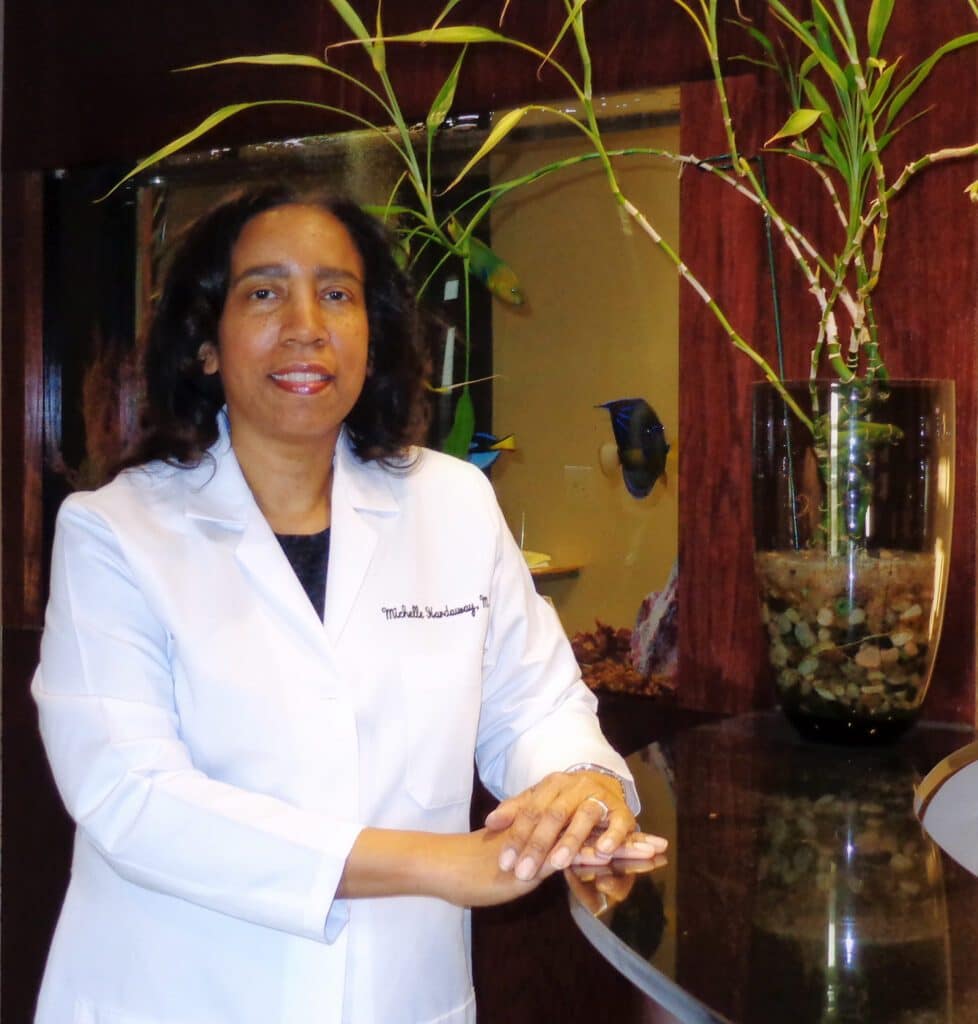
Written by Michelle Hardaway, M.D., F.A.C.S., Board-Certified Plastic Surgeon
Dr. Michelle Hardaway is a board-certified plastic surgeon and Fellow of the American College of Surgeons with over 20 years of experience. A former Chief of Plastic and Reconstructive Surgery at Detroit Receiving Hospital and an Assistant Clinical Professor of Surgery at Wayne State University School of Medicine, she performs every procedure personally at her QUAD A accredited practice in Farmington Hills.