Key takeaways
- Lifespan: the FDA says breast implants are not lifetime devices; at this practice most last about 10 years, and some patients keep theirs for 20 years or more.
- Monitoring: silicone implants need periodic imaging to check for a silent rupture, starting five to six years after surgery.
- Weight: an implant weighs about as much as the same volume of water, so a 300 cc implant adds roughly two-thirds of a pound per side.
- Feel: implants that suit your frame, with enough tissue over them, feel close to natural, but in thin tissue an implant edge or ripple can be felt or seen.
- Paperwork: before surgery the FDA requires you to review and sign a patient decision checklist with your surgeon.
This content is for general informational purposes only and should not be taken as medical or other professional advice. Readers should consult a qualified licensed professional for advice about their specific situation. Reading this page does not create a physician-patient relationship. All surgery carries risk, and individual results vary. Seek immediate emergency care for severe or urgent symptoms.
Last Updated: November 28, 2026
Table of Contents
Why Would Anyone Want Breast Implants?
People choose breast implants for personal reasons: breasts that feel small for their frame, a noticeable difference between the two sides, or volume lost after pregnancy, breastfeeding or weight loss. Implants are also used to rebuild the breast after cancer surgery. The common thread is wanting to feel more at ease in your own body.
At this practice, breast augmentation in Farmington Hills is planned around your anatomy and goals rather than a set cup size, with the aim of a natural-looking result that suits your frame. Good candidates are in good health, have fully developed breasts and have realistic expectations.
The decision should be yours alone. A thorough consultation is the place to say what you want to change and why, and to hear an honest answer about whether implants are the right tool for it.
What Age Is Best for Breast Implants?
There is no single best age for breast implants, but the FDA has approved saline implants for patients 18 and older and silicone gel implants for those 22 and older. After that, your health, whether your breasts have finished developing and your plans for pregnancy matter more than your age.
There is no upper age limit at this practice; overall health is what counts. Many people plan augmentation after they have finished having children, because pregnancy and breastfeeding can change the size and shape of augmented breasts. ASPS notes that pregnancy, weight loss and menopause may all influence how augmented breasts look over a lifetime.
If your breasts have started to sag, implants alone may not give the shape you want. In that case a breast augmentation with lift adds volume and raises the breast in one operation.
What Happens After 10 Years of Breast Implants?
After 10 years, many people still have their original breast implants and are happy with them, but the chance of a problem rises with time. The FDA says implants are not lifetime devices, and the longer you have them, the more likely you are to need removal or replacement for rupture, capsular contracture or changes in appearance.
At this practice, most implants last approximately 10 years, though that is an average: some patients keep theirs for 20 years or more, while others need earlier replacement. The FDA’s list of breast implant risks states that the life of an implant varies by person and cannot be predicted, and that you may need one or more operations over your lifetime.
Silicone implants need monitoring because a rupture can be silent. The ASPS breast augmentation safety page cites the FDA recommendation of an ultrasound or MRI five to six years after silicone implant placement and every two to three years after that. A saline rupture is obvious, because the breast deflates as the body absorbs the salt water.
Your natural breast tissue keeps aging around the implant, too. Changes in weight, pregnancy and gravity can bring sagging over time, which some people address with a lift or an implant exchange years later. Regular follow-up visits help catch changes early.
How Many Pounds Do Breast Implants Add to Your Weight?
Breast implants add surprisingly little to your weight: each implant weighs roughly as much as the same volume of water. A 300 cc implant weighs about 300 grams, or around two-thirds of a pound, so a pair adds well under two pounds in total. Larger implants weigh proportionally more.
A 2015 article in Aesthetic Surgery Journal gives the specific gravity of saline as 1.0 g/mL and silicone gel as 0.97 g/mL, which is why implant volume and weight are treated as roughly equal. The authors, who developed a lightweight implant, argue that heavy implants of more than 350 to 400 grams stretch and thin the breast tissue over time.
That is one reason size is chosen carefully. Implants are measured in cubic centimeters (cc) rather than cup sizes, and the same volume can look very different on two people, because chest width, existing breast tissue and skin elasticity all shape the result. Choosing a size your tissue can support tends to age better.
How to Identify if Someone Has Breast Implants?
You often cannot tell if someone has breast implants, especially when the implant suits their frame and sits under enough tissue. Signs that may show include very full, rounded upper breasts and, where the skin is thin, a visible implant edge or rippling. Small implants with plenty of tissue over them can look entirely natural.
The FDA lists palpability (an implant that can be felt through the skin), visibility (an implant that can be seen through the skin) and wrinkling or rippling among possible local complications. These are more likely when the overlying tissue is thin or the implant is large for the frame.
Implant choice and placement make a difference. At this practice, implants may be placed under the chest muscle, over it or partly beneath it (dual-plane), and saline implants may be more prone to rippling than silicone. If a natural look is your priority, say so at consultation so size, type and placement are chosen with that in mind.
Can My Husband Squeeze My Breast Implants?
Yes. Once you have fully healed, a partner can touch and gently squeeze your breasts without harming a healthy implant. Implants are built to move with everyday contact. What can damage one is trauma or intense physical pressure, which the FDA lists among possible causes of rupture, so firm, forceful squeezing is best avoided.
During recovery the answer is different. Your breasts are swollen and tender, a surgical support bra is worn throughout recovery, and the implants take two to three months to settle into a more natural position. Ask your surgeon when normal intimacy and contact with the chest can resume.
If touch ever becomes painful, or you notice new firmness, a change in shape or swelling, have it checked. The FDA describes capsular contracture as tightening of the tissue capsule around an implant that makes the breast feel firm or hard.
Other pressure matters too. The FDA lists compression during a mammogram as a possible cause of rupture, so always tell the technologist you have implants before the images are taken.
Frequently Asked Questions
Can guys feel your breasts when you hug them?
In an ordinary hug, augmented breasts usually feel like breasts. Silicone gel implants under a healthy layer of tissue tend to feel the most natural, while an implant in thin tissue, or one with capsular contracture, can feel firmer.
Can breast implants affect breastfeeding?
Many people breastfeed after augmentation, but the FDA lists sensation changes that may affect breastfeeding among the possible complications. If you plan to breastfeed, mention it so the incision and placement are chosen with that in mind.
How long does a typical breast augmentation take?
At this practice a breast augmentation takes one to two hours under general anesthesia. Most patients return to desk work within three to seven days and resume full exercise, including chest workouts, around six to eight weeks after surgery.
If you are weighing implants, book a paid consultation at 27920 Orchard Lake Rd in Farmington Hills, convenient for patients across Metro Detroit. Board-certified plastic surgeon Dr. Hardaway walks you through implant type, size and placement, the FDA decision checklist and the long-term care implants need, and the breast augmentation cost guide explains what a quote includes. All consultations are paid and appointment-based to ensure dedicated time and a personalized plan.
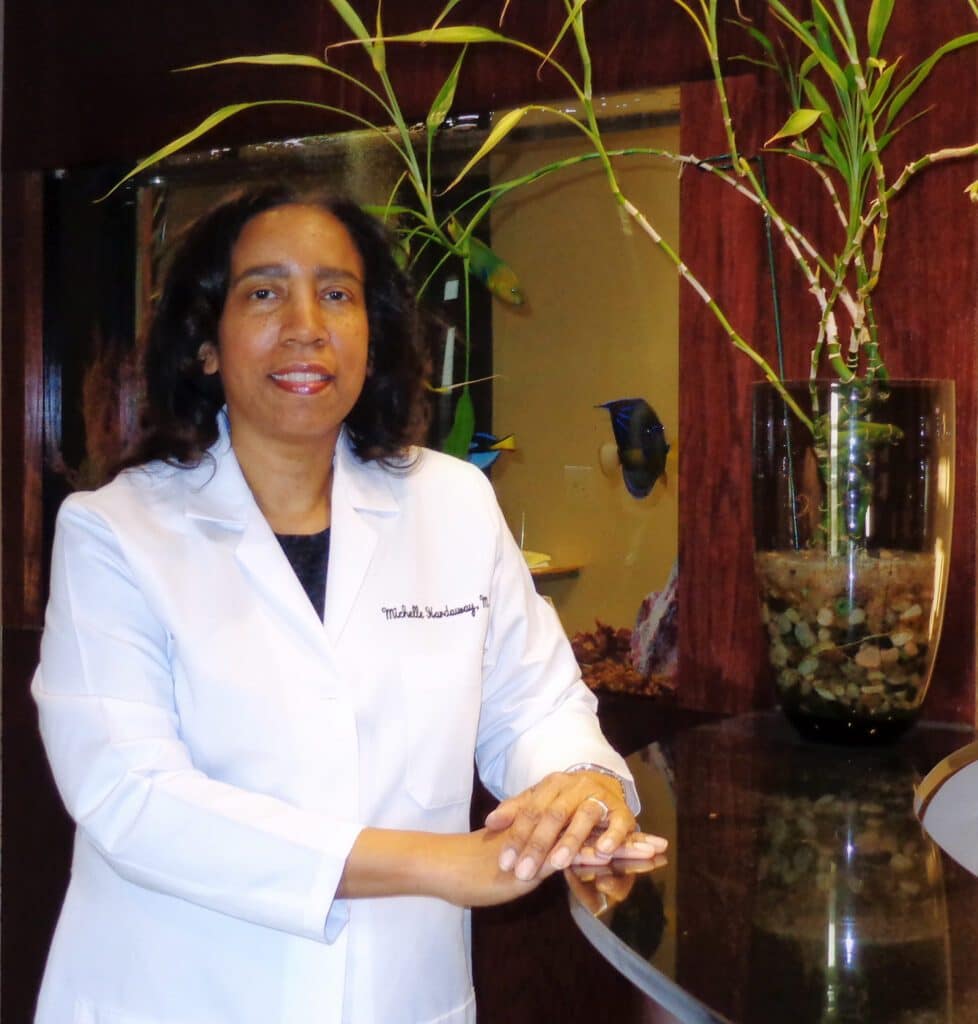
Written by Michelle Hardaway, M.D., F.A.C.S., Board-Certified Plastic Surgeon
Dr. Michelle Hardaway is a board-certified plastic surgeon and Fellow of the American College of Surgeons with over 20 years of experience. A former Chief of Plastic and Reconstructive Surgery at Detroit Receiving Hospital and an Assistant Clinical Professor of Surgery at Wayne State University School of Medicine, she performs every procedure personally at her QUAD A accredited practice in Farmington Hills.