General · Oct 13, 2026
What Is a Good Age for Breast Reduction in Farmington Hills?
Breast reduction can be performed at any age. Learn what shapes the best age for breast reduction in Farmington Hills. Call (248) 780-0558.
Read article
The flawless results you see posted hours after surgery aren't the full story. Here's the physiological truth about post-op tissue healing, why temporary lumps and swelling are signs…
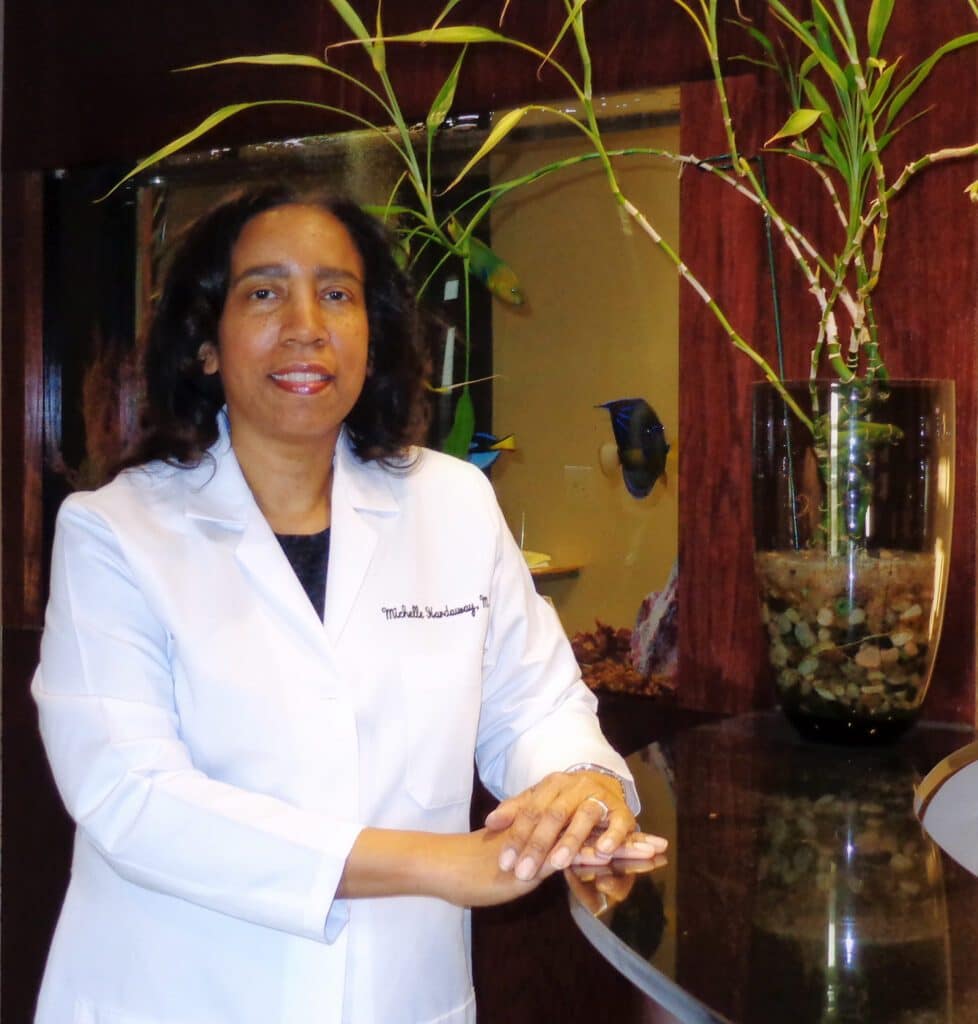 Dr. Michelle Hardaway, M.D., F.A.C.S.
The flawless results you see posted hours after surgery aren’t the full story. Here’s the physiological truth about post-op tissue healing, why temporary lumps and swelling are signs your body is working correctly, and when it’s time to seek a second opinion.
You’ve done the research. You’ve watched the videos, saved the before-and-afters, and built a folder of inspiration. And then, two weeks after your own liposuction, you pull up your phone and something feels deeply wrong — the body in the mirror doesn’t match the body on the screen.
That disconnect has a name. We call it the Social Insight Gap: the chasm between the instant, filtered perfection marketed on social media and the medically accurate reality of how a human body actually heals from surgery.
You are not botched. You are healing. And understanding the difference may be the most important thing you read during your recovery.
“The most dangerous thing social media has done to plastic surgery isn’t creating unrealistic body standards — it’s collapsing a 12-month healing journey into a single photograph taken before the patient has left the operating room.”
— Dr. Michelle Hardaway, M.D., F.A.C.S., Board-Certified Plastic Surgeon
Here is what many high-volume clinics and social media influencers do not tell you: the most dramatic “on-the-table” photos — the ones that generate the most likes and the most consult bookings — are taken in the operating room or recovery suite, often within hours of the procedure.
At that precise moment, the body has not yet initiated its full inflammatory response. Swelling is minimal. The treated tissue is compressed. The result looks sculpted and smooth because the complex biological process of healing has barely begun.
Within 24 to 72 hours, the body begins doing exactly what it is designed to do: rushing fluid, white blood cells, and repair proteins to the surgical site. This is not a complication. This is physiology. But it does mean the body you see in the mirror at week two looks nothing like the body in that Instagram post — and that gap is precisely where anxiety takes root.
Liposuction is a surgical procedure that disrupts the subdermal tissue layer, severs small lymphatic vessels, and creates a controlled trauma that the body must then repair over months — not days. Understanding this process is the single most effective antidote to post-op panic.
The Healing Timeline: What Nobody Posts Online
| Phase | Timeframe | What’s Happening |
| Peak Swelling | Weeks 1–2 | Inflammatory response is at its most active. The treated area may feel firm, tender, and look larger than before surgery. This is normal and expected. |
| Lumps & Firmness | Weeks 3–6 | As fluid redistributes, patients often feel nodular areas or irregular texture under the skin. This typically reflects early scar tissue formation and disrupted lymphatic flow — not a permanent outcome. |
| Progressive Softening | Months 3–4 | Scar tissue matures and softens. Lymphatic drainage resumes more normally. Contour begins to emerge more clearly. Most patients see significant improvement by this milestone. |
| Final Results | Months 6–12 | Tissue remodeling is largely complete. This is when a fair, accurate assessment of the surgical outcome can be made. Final results are rarely visible before this window. |
Yes — in most cases, lumps felt at three weeks post-op are a normal part of the healing process. At this stage, the body is actively remodeling the disrupted tissue, and small areas of firmness or irregularity are extremely common. They are not necessarily a sign of a botched procedure.
What you are likely feeling is a combination of post-surgical edema (swelling trapped in the tissue), early fibrosis (the body’s natural scar tissue response), and the compression of healing lymphatic channels. These processes typically resolve on their own with time, proper compression garment use, and — in some cases — manual lymphatic drainage massage, which your surgeon may recommend.
The key question is not whether lumps exist at three weeks, but whether they are changing. A normal healing lump softens and shrinks over weeks. A lump that hardens, grows, or is accompanied by increasing pain or skin changes warrants a conversation with your surgeon.
Not every lump is the same, and understanding the distinction between normal post-operative swelling and early lipo fibrosis can help you have a more informed conversation with your care team. For a deeper clinical breakdown, our guide on [normal post-op healing timelines] covers this in detail.
Filter vs. Reality: What the Feed Doesn’t Show You
| What Social Media Shows | What Medically Accurate Recovery Looks Like | |
| Timing of photos | On-table shots taken within hours of surgery | Weeks 1–3: Noticeable swelling, bruising, and firmness |
| Swelling | Minimal — inflammatory response hasn’t started | Peaks at days 2–3; gradual improvement over weeks |
| Texture | Smooth, compressed, sculpted | Lumps and uneven texture common through weeks 3–6 |
| Contour | Dramatic, immediate definition | Gradual refinement from months 2–4 onward |
| Final result | Implied to be immediate | Emerges between months 6–12 |
| What’s hidden | Compression garments, bruising, recovery reality | Nothing — this is what healing actually looks like |
Normal Swelling vs. Possible Lipo Fibrosis — Know the Difference:
| Characteristic | Normal Post-Op Swelling | Possible Lipo Fibrosis |
| Texture | Soft to moderately firm; fluctuates day to day | Hard, dense, or rope-like bands under the skin |
| Timeline | Peaks at 2–3 weeks; progressively improves | Firmness persists or worsens beyond 3–4 months |
| Symmetry | May feel uneven but improves with healing | Visible contour deformity that does not resolve |
| Pain level | Mild tenderness that decreases over time | Persistent or increasing discomfort in specific areas |
| Skin changes | Temporary discoloration; resolves with healing | Dimpling, tethering, or skin adhering to underlying tissue |
| Response to massage | Softens with lymphatic drainage massage | Little to no change despite consistent massage therapy |
In the majority of cases, lumpy results in the first several weeks after liposuction are not permanent. They reflect the normal, time-dependent process of tissue remodeling and lymphatic healing. Most patients who follow their surgeon’s post-operative protocol — including consistent compression garment use and recommended massage — see meaningful improvement by months three to four, with final results emerging closer to the 6-to-12-month mark.
However, it is important to acknowledge that in some cases — particularly when procedures are performed by under-qualified providers, at excessively high volumes of fat removal, or without appropriate post-operative care — fibrosis can become more established and may require medical intervention to address. This is not something to self-diagnose from a forum. A board-certified plastic surgeon can evaluate your specific tissue and provide a realistic, customized treatment plan based on what is actually present.
There is a meaningful difference between post-op anxiety — which is almost universal — and a genuine signal that something may need to be addressed. Seeking a second opinion is not an act of disloyalty to your original surgeon. It is an act of self-advocacy.
Consider scheduling an evaluation with a board-certified plastic surgeon if you are experiencing any of the following beyond the three-to-six-month mark:
If your results were performed at a high-volume, discount clinic — or by a provider who was not a board-certified plastic surgeon — it is worth having an independent evaluation sooner rather than later. Correcting complications is generally more straightforward when addressed early. Our team can walk you through what safely correcting botched results looks like.
Dr. Hardaway’s approach to revision surgery is grounded in over 20 years of experience, performed in a QUAD A accredited surgical center with onsite operating rooms and a Certified Registered Nurse Anesthetist (CRNA) present for every procedure. Safety is not a marketing claim here — it is a structural commitment. Learn more about what achieving natural-looking enhancement through liposuction looks like when done with the right technique from the start.
Not sure if what you’re experiencing is normal healing or something that needs attention? The answer is never found in a comment section. Dr. Hardaway offers a paid consultation specifically designed to give you an honest, medically grounded assessment — no sales pressure, no promises of overnight perfection. Just clarity. Book your consultation here.
You deserve an honest assessment — not another filter.
Whether you’re questioning your current healing progress or exploring options after a disappointing result elsewhere, Dr. Hardaway provides the kind of transparent, judgment-free evaluation that social media simply cannot offer.
A paid consultation means dedicated time, a real examination, and a customized plan — not a sales pitch.
→ Book a Consultation with Dr. Hardaway
Consultation fee applies. We do not accept insurance. CareCredit financing is available with no upfront costs.
In most cases, no. Lumpy results in the first weeks to months after liposuction typically reflect normal swelling and tissue remodeling, not a permanent outcome. True final results may take 6 to 12 months to fully emerge. However, persistent hard lumps or contour irregularities beyond 3–6 months may warrant evaluation by a board-certified plastic surgeon.
Yes — feeling lumps or firmness at three weeks post-op is very common and generally considered a normal part of the healing process. The body is actively remodeling disrupted tissue and managing lymphatic drainage at this stage. Lumps that are softening and decreasing over time are typically a sign of normal healing.
Most patients see significant improvement in texture and firmness by months 3–4 post-op, with final results continuing to refine through months 6–12. The timeline can vary based on the extent of the procedure, the patient’s individual healing response, and adherence to post-operative care protocols.
Yes, in many cases, revision liposuction or targeted treatment for lipo fibrosis can meaningfully improve outcomes from a previous procedure. The appropriate approach depends on what is actually present in the tissue, which requires an in-person evaluation by a board-certified plastic surgeon, not an online assessment.
Many “results” photos posted on social media are taken on the operating table or within hours of surgery — before the body’s inflammatory response has begun. These images do not represent a realistic healing journey. They are also frequently enhanced with lighting, posing, and filters. A medically accurate recovery involves weeks of swelling and gradual refinement before results are visible.
Breast reduction can be performed at any age. Learn what shapes the best age for breast reduction in Farmington Hills. Call (248) 780-0558.
Read articleYour belly protrudes where your fascia stretched. That is the answer most patients have been waiting years to hear, and it is rarely explained with the precision it…
Read articleYou've probably seen the ads. A med spa in a strip mall near your gym, Instagram-polished and offering Botox for less than you expected. Maybe you've already booked…
Read articleBring it to a consultation. All consultations are paid and appointment-based to ensure dedicated time and a personalized plan.
Not ready to book? See patient results or read the blog first.
Dr. Hardaway sees every consultation personally. You will have time to ask what you came to ask.
Prefer to talk now? (248) 780-0558
Submitting a request does not create a physician-patient relationship and does not confirm an appointment. A member of the team will be in touch to arrange one.