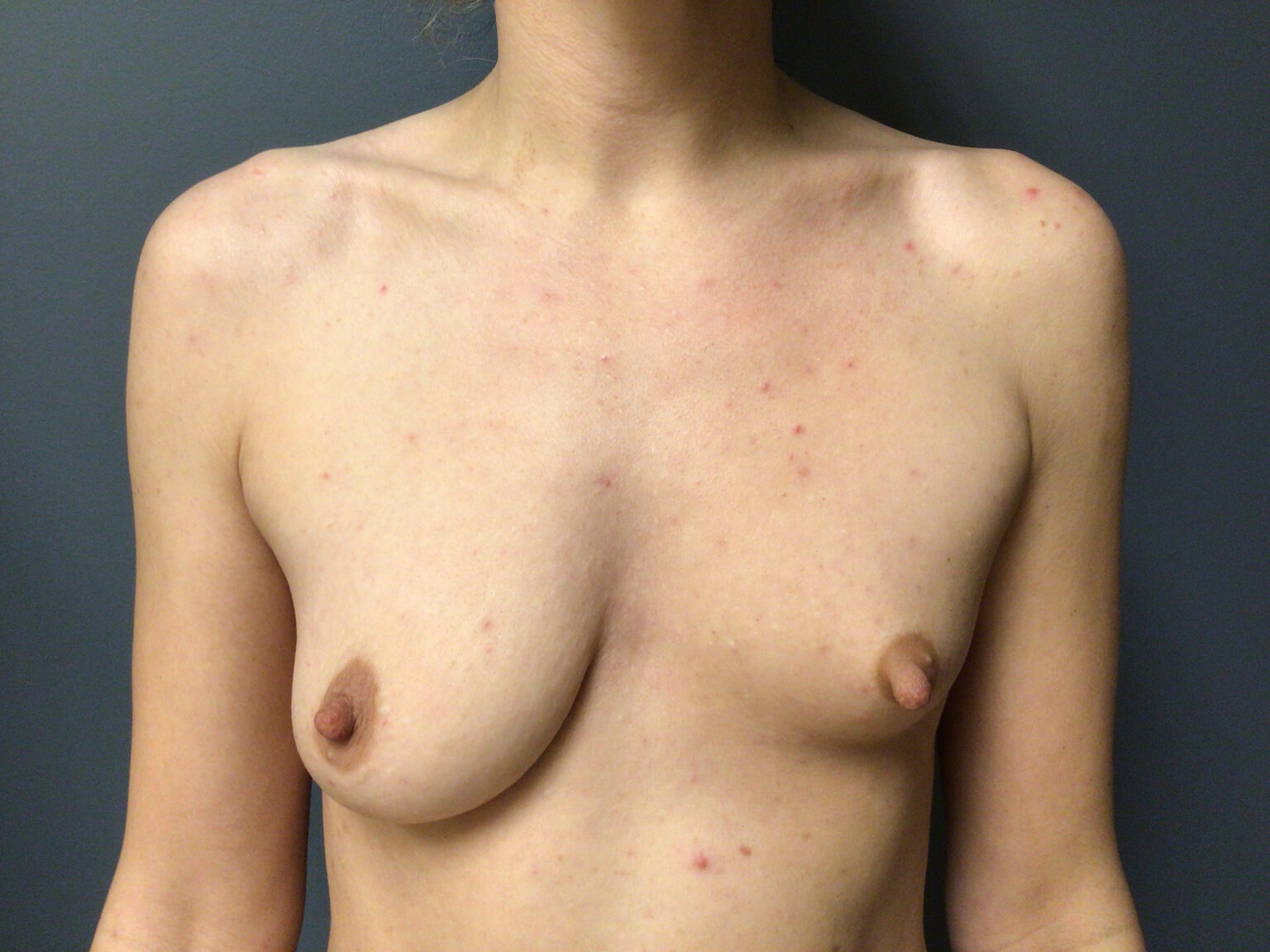
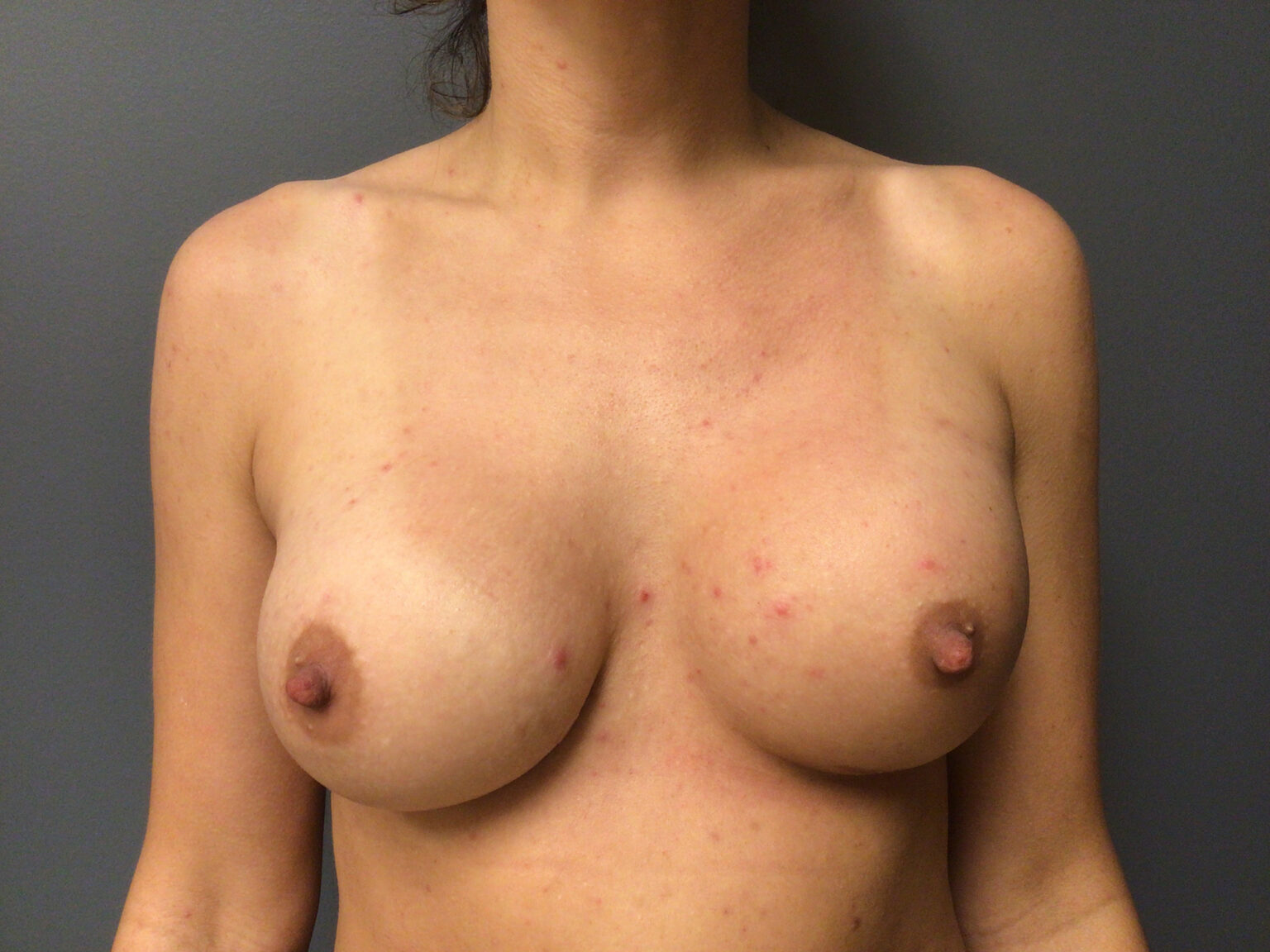
Breast Augmentation · Case 01
Ask about this result →
You can get breast augmentation near Detroit at Dr. Michelle Hardaway's Farmington Hills practice, about 24 minutes from Midtown via M-10 North, a straight 20.8-mile drive. A board-certified plastic surgeon, she performs each augmentation and implant revision personally in a QUAD A accredited onsite operating room, after a paid consultation built around your anatomy.
Detroit patients ask about breast augmentation, breast implants and breast revision, and the last of those tells its own story: some people arrive after a first surgery elsewhere did not go as planned. Our page for Detroit patients covers the practice and the drive. Below are answers to the implant questions people in the city ask most.
If you are comparing surgeons, start with the background of Dr. Hardaway, a plastic surgeon in Michigan; our guide for Detroit patients explains how patients from Detroit reach the Farmington Hills office.
At Dr. Hardaway’s practice, breast procedures average $6,600 to $10,500. Where your own quote falls inside that range depends on the plan you settle on together, including the implant you choose and whether a lift or a second procedure joins the operation. Surgeon, facility, anesthesia, pre-op testing, garments and follow-up visits all sit inside one quote.
We do not accept insurance. We offer financing options for qualified patients, including CareCredit. For a closer look at what pushes a quote up or down, read our breast augmentation cost breakdown.
No. Breast augmentation has no upper age limit, and your general health counts for more than your birthday. The FDA’s age rules are minimums only: 18 and older for saline implants, 22 and older for silicone gel. A patient in her fifties is assessed the way anyone else is, through an examination and a careful health history.
Later in life, a second question often comes up: has the breast also descended? Implants restore volume but are not a reliable cure for sagging, so some patients are better matched to augmentation with a lift for Detroit patients. Dr. Hardaway explains which approach fits your tissue at the consultation instead of nudging you toward the bigger operation. Younger patients who are pregnant or still nursing get a more predictable result by waiting until the breasts have settled.
Most people describe moderate discomfort rather than sharp pain: pressure, tightness and soreness across the chest for roughly the first three to five days. Prescription medication covers that stretch, and most patients move to over-the-counter relief within about a week. The first day or two call for the most rest and limited arm movement.
Before you schedule, line up help at home in Detroit for those first 24 to 48 hours. Lifting stays under roughly 5 to 10 pounds for at least two weeks, which takes planning if small children are part of your day. Desk jobs usually resume within three to seven days, light cardio after two to three weeks, and chest workouts at six to eight weeks. Visible bruising and swelling mostly clear within two to three weeks.
Implants are not lifetime devices. They average roughly 10 years, though some people keep their originals for 20 years or more while others need an earlier exchange because of a complication or a change in the look they want. Implant type, pocket placement, later body changes and lifestyle all influence how long yours stay in.
That is why revision appears on the list of procedures Detroit patients travel for. Dr. Hardaway’s work includes dual-plane placement and correction of capsular contracture, the scar tissue that can tighten around an implant and distort it, for people unhappy with results from another clinic. Going beneath the muscle typically lowers contracture risk compared with placement above it. Silicone devices also need imaging for silent rupture: the FDA advises an ultrasound or MRI five to six years after surgery, then every two to three years.
Not in any lasting way. Creams, pills, pumps and exercise routines do not add permanent breast volume, although chest exercises can firm the muscle beneath. A genuine change in size or shape takes surgery, either with implants or with fat transfer, which relocates some of your own fat into the breasts.
Fat transfer usually gives a smaller increase than an implant. The fat is first collected with liposuction, and only a portion survives in its new location. Which route can reach the size you have in mind is a judgment Dr. Hardaway makes after examining you.
A few things surprise first-time patients. New implants sit high and firm before softening and dropping into a more natural position over two to three months. Subtle swelling can linger for months after the bruising fades. And a later pregnancy or breastfeeding can change the result, which is why some people wait until their family is complete.
Nursing is often still possible, though the FDA lists breastfeeding difficulty as a potential complication, and an incision at the nipple passes closer to milk ducts and nerves. The FDA also requires that you receive a patient decision checklist before surgery. Our article on what no one tells you about breast implants goes deeper. When pregnancy changed your abdomen as well, a mommy makeover for Detroit patients can address both in one plan.
Patients from Indian Village, Palmer Woods, the Rivertown-Warehouse District and the 48201 zip code around the Detroit Medical Center campus often arrive having already confirmed board certification on the ABPS lookup. Dr. Hardaway, a former Chief of Plastic and Reconstructive Surgery at Detroit Receiving Hospital, brings over 20 years of experience to each augmentation, and her full breast augmentation procedure page covers implant types and placement in depth. All consultations are paid and appointment-based to ensure dedicated time and a personalized plan.
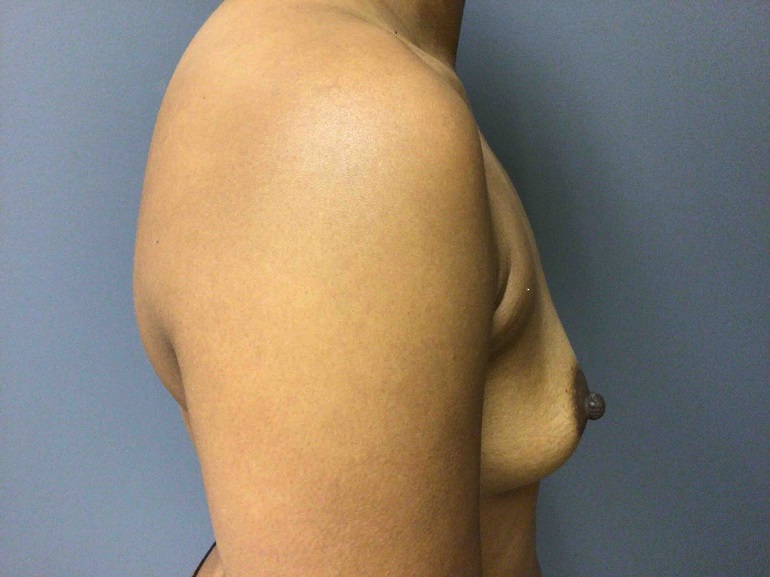
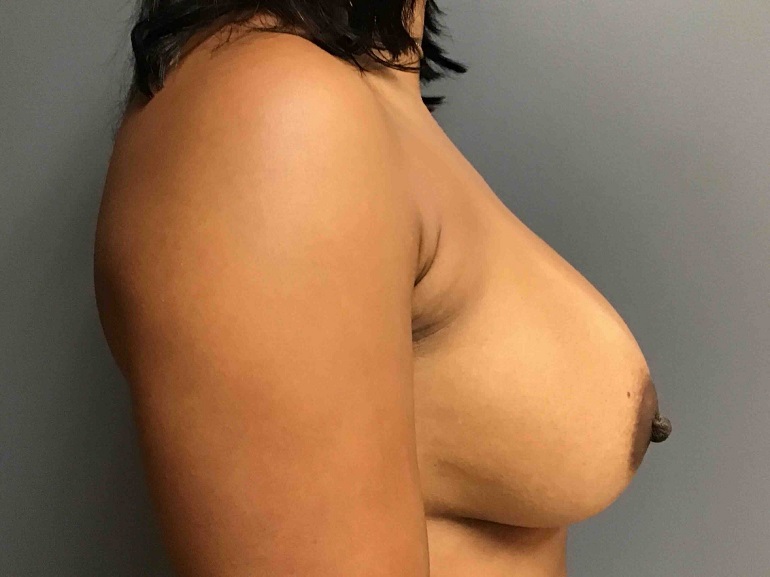
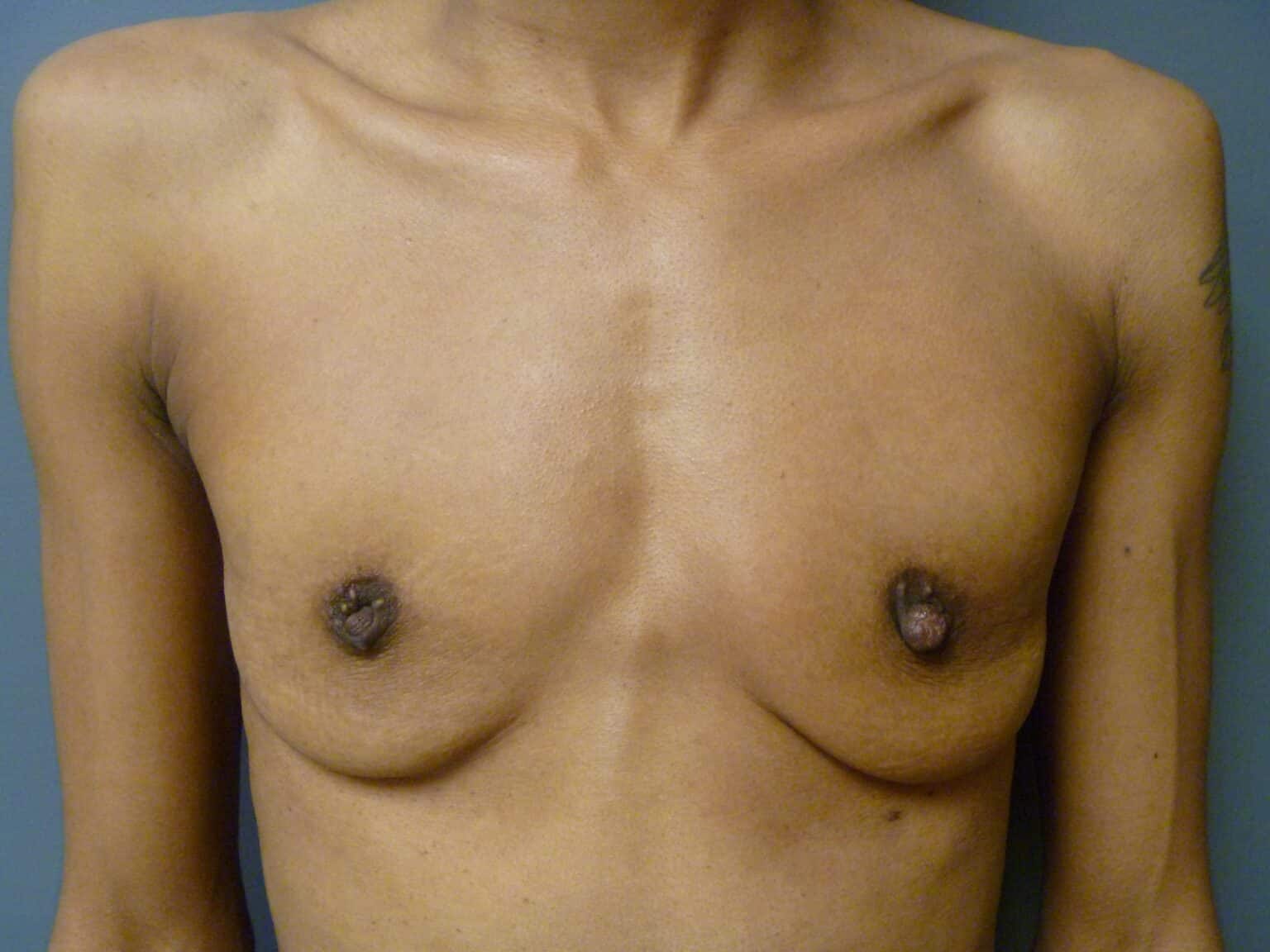
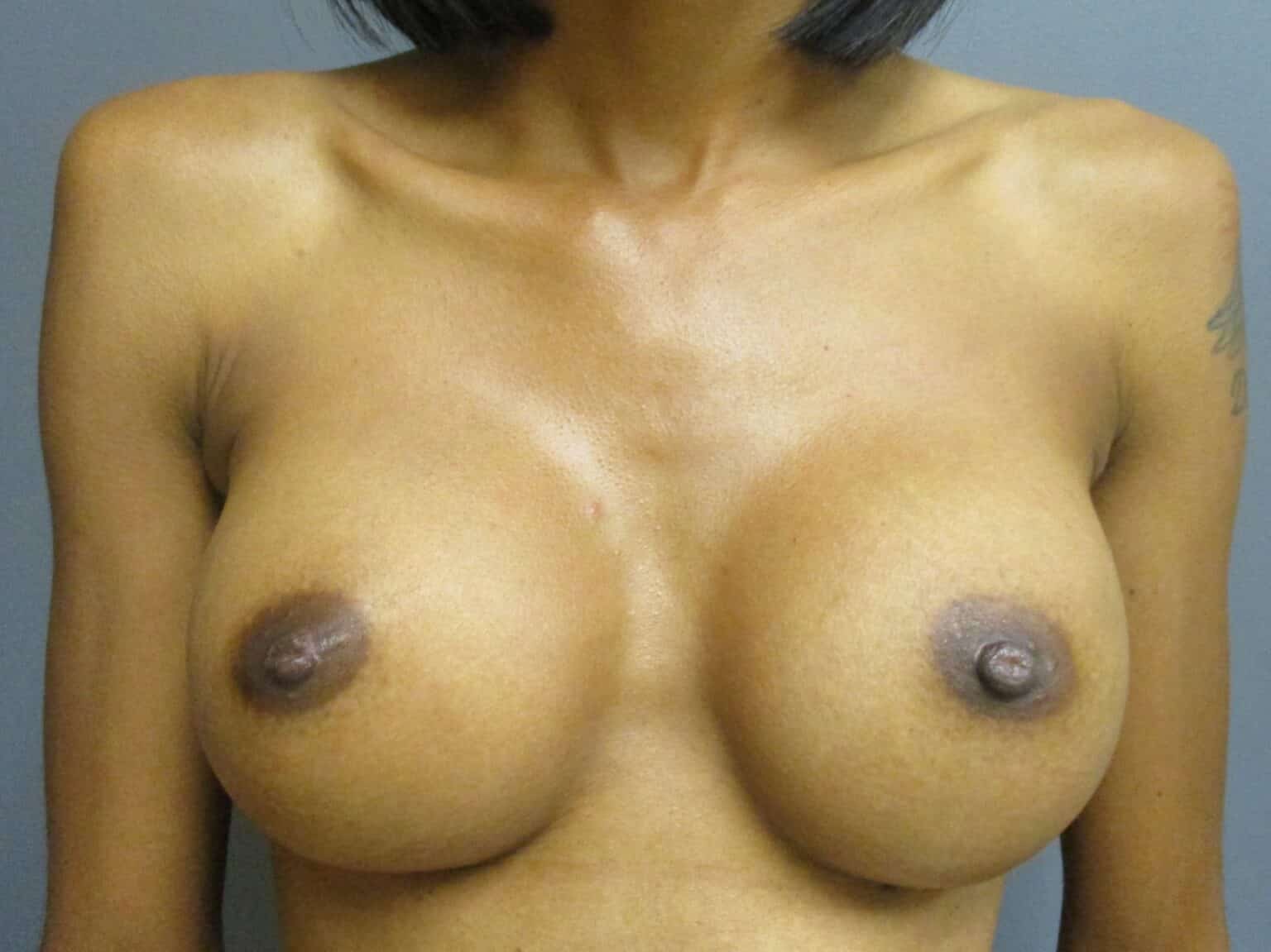
Individual results vary. These photographs show outcomes for specific patients and are not a guarantee of any particular result.
Not while you heal. A surgical support bra is worn throughout recovery as swelling settles and the implants move into their final position, a process that takes two to three months. When you can safely go without one after that depends on how you heal, so confirm the timing with Dr. Hardaway at a follow-up visit.
There is no single answer. Implants are chosen in cubic centimeters, not cup sizes, and the same volume can look quite different on two bodies because chest width, existing breast tissue and skin elasticity all shape the outcome. The aim is a size that suits your frame and looks natural on you, chosen together at consultation.
Usually one to two hours, under general anesthesia. Through a small incision, the implant is placed under the chest muscle, above it, or partly beneath it in a dual-plane pocket, and the incision is closed. At the Farmington Hills surgical center a CRNA is present for every procedure, and your incision and pocket are chosen at consultation.
Whether breast augmentation suits you is decided after an examination and a review of your history. All consultations are paid and appointment-based to ensure dedicated time and a personalized plan.
Not ready to book? See patient results or read the blog first.
Dr. Hardaway sees every consultation personally. You will have time to ask what you came to ask.
Prefer to talk now? (248) 780-0558
Submitting a request does not create a physician-patient relationship and does not confirm an appointment. A member of the team will be in touch to arrange one.