General · Oct 13, 2026
What Is a Good Age for Breast Reduction in Farmington Hills?
Breast reduction can be performed at any age. Learn what shapes the best age for breast reduction in Farmington Hills. Call (248) 780-0558.
Read article
If you've spent any time researching cosmetic procedures in Metro Detroit, you've likely noticed something confusing: every clinic seems to be run by a "cosmetic surgeon." The titles…
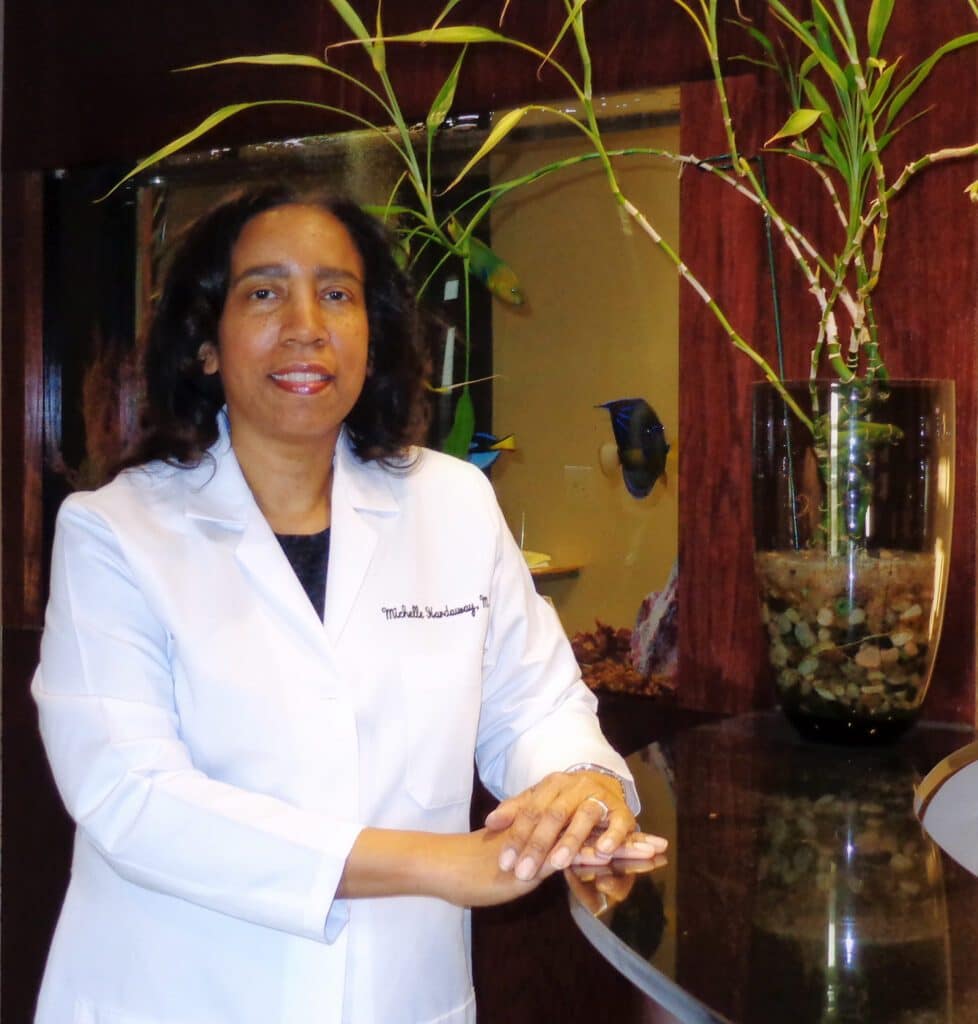 Dr. Michelle Hardaway, M.D., F.A.C.S.


If you’ve spent any time researching cosmetic procedures in Metro Detroit, you’ve likely noticed something confusing: every clinic seems to be run by a “cosmetic surgeon.” The titles look similar. The before-and-after photos look similar. The prices are wildly different.
That difference is not arbitrary. It reflects a gap in training, accountability, and surgical safety that most patients don’t discover until something goes wrong.
This guide exists to close that gap — so you can make a decision you feel genuinely confident about.
Yes. And it’s a difference that Michigan law does not protect you from.
A board-certified plastic surgeon has completed medical school, a minimum of five to seven years of accredited residency training (including general surgery and plastic surgery), and has passed rigorous written and oral examinations administered by the American Board of Plastic Surgery (ABPS) — the only board recognized by the American Board of Medical Specialties for this specialty.
A “cosmetic surgeon” is not a protected title in Michigan. Under current state law, any licensed M.D. — regardless of specialty training — may legally market themselves using that phrase. A physician who completed a residency in family medicine, dermatology, or obstetrics can open a cosmetic surgery practice without ever completing a plastic surgery residency.
This is not a criticism of those physicians as individuals. It is a structural reality of how medical marketing operates in Michigan, and it is one of the most important facts you can know before booking a consultation.
The bottom line: “Cosmetic surgeon” is a marketing term. “Board-certified plastic surgeon” is a verifiable credential. They are not interchangeable.
Medical titles can feel like alphabet soup. Here’s what each one actually signals about your provider’s training and accountability.
M.D. (Doctor of Medicine)
Completed a four-year medical degree at an allopathic medical school. This is the foundational credential — it does not, on its own, indicate any surgical specialty training.
D.O. (Doctor of Osteopathic Medicine)
Completed a four-year osteopathic medical degree with additional coursework in musculoskeletal medicine. D.O.s are fully licensed physicians and may pursue surgical residencies. The distinction matters primarily when evaluating whether their residency training was in plastic surgery specifically.
Board-Certified Plastic Surgeon
Has completed a plastic surgery residency accredited by the Accreditation Council for Graduate Medical Education (ACGME) and passed the American Board of Plastic Surgery examinations. This is the standard you should require for any surgical procedure — facial, body, or reconstructive.
F.A.C.S. (Fellow of the American College of Surgeons)
This designation goes further. To earn F.A.C.S., a surgeon must be nominated by peers, demonstrate an ethical record, complete a review of their surgical outcomes, and commit to ongoing professional standards. It is not automatic with board certification — it is earned through peer accountability. You can verify any surgeon’s F.A.C.S. status directly through the American College of Surgeons’ online directory.
| Credential | What It Requires | What It Tells You |
| M.D. | 4 years of medical school | Basic medical training only |
| D.O. | 4 years of osteopathic school | Basic medical training, a different approach |
| Board-Certified Plastic Surgeon | Med school + 5–7 yr residency + board exams | Specialty-specific surgical training, verified |
| F.A.C.S. | Board certification + peer review + ethical record | Higher accountability, outcomes-reviewed |
Consider what a board-certified plastic surgeon has done before they ever perform a procedure on you.
Four years of medical school. Five to seven years of residency — including rotations in general surgery, microsurgery, burn and wound care, reconstructive surgery, and cosmetic procedures. Thousands of hours in an accredited operating room. Written and oral board examinations. Ongoing continuing medical education requirements to maintain certification.
A MedSpa injector, by contrast, may have completed a weekend certification course. Some states require a licensed nurse (RN) or nurse practitioner (NP) to administer injectables; others have minimal requirements. The technical skill involved in administering Botox safely is real — but it is not the same as the anatomical knowledge required to understand what happens when something goes wrong.
Facial anatomy is extraordinarily complex. The difference between a natural-looking result and a frozen, overdone appearance often comes down to a provider’s depth of knowledge about facial musculature, nerve pathways, and vascular structures. That knowledge is built over years of surgical training — not a weekend course.
For patients considering [board-certified facial rejuvenation procedures](internal link), this distinction is not academic. It is the foundation of your outcome.
This is one of the most common questions patients bring to a consultation, and it deserves a direct answer.
When you pay for a procedure with a board-certified plastic surgeon, you are not simply paying for the treatment itself. You are paying for:
The price difference between a MedSpa and a board-certified surgeon is real. So is the difference in what you receive. For patients who have already experienced a result they are unhappy with, [revision surgery for botched facial injections](internal link) is possible — but it is always more complex, more costly, and more emotionally difficult than getting it right the first time.
Not all surgical facilities are created equal, and in Michigan, outpatient surgical centers are not required to meet hospital-level safety standards unless they are specifically accredited.
QUAD A (Accreditation Association for Ambulatory Health Care) is one of the most rigorous independent accreditation bodies for outpatient surgical facilities. A QUAD A accredited center has undergone a comprehensive on-site survey evaluating:
When you have a procedure in a QUAD A accredited facility, you are in an environment that has been independently verified to meet the same standards you would expect in a hospital operating room. Many MedSpas and non-accredited cosmetic clinics operate in facilities that have never undergone this level of review.
Before booking any procedure — surgical or non-surgical — ask your provider directly: Is this facility QUAD A, AAAHC, or JCAHO accredited? If they cannot answer clearly, that is important information.
Choosing a surgeon is one of the most important decisions you will make for your health and confidence. These questions are designed to help you evaluate any provider — not just to compare, but to protect yourself.
A qualified surgeon will welcome every one of these questions. Hesitation or vague answers are a signal worth taking seriously.
You deserve to feel genuinely confident in the person you trust with your face and body — not just reassured by a title that may not mean what you think it means.
Dr. Michelle Hardaway, MD, FACS, is a dual board-certified plastic surgeon with over 20 years of experience serving Metro Detroit patients. She holds the F.A.C.S. designation, serves as an Assistant Clinical Professor at Wayne State University School of Medicine, and operates from a QUAD A-accredited facility with onsite surgical staff. Her approach is built on one principle: results that look like you — refreshed, confident, and completely natural.
A consultation with Dr. Hardaway is a paid, personalized medical appointment — because your care deserves that level of attention from the very first conversation.
Ready to take the next step? Schedule a secure facial consultation in Detroit and bring your questions. We will answer every one of them.
Breast reduction can be performed at any age. Learn what shapes the best age for breast reduction in Farmington Hills. Call (248) 780-0558.
Read articleYour belly protrudes where your fascia stretched. That is the answer most patients have been waiting years to hear, and it is rarely explained with the precision it…
Read articleYou've probably seen the ads. A med spa in a strip mall near your gym, Instagram-polished and offering Botox for less than you expected. Maybe you've already booked…
Read articleBring it to a consultation. All consultations are paid and appointment-based to ensure dedicated time and a personalized plan.
Not ready to book? See patient results or read the blog first.
Dr. Hardaway sees every consultation personally. You will have time to ask what you came to ask.
Prefer to talk now? (248) 780-0558
Submitting a request does not create a physician-patient relationship and does not confirm an appointment. A member of the team will be in touch to arrange one.