
Key Takeaways
- The choice between a med spa and a board-certified plastic surgeon for injectables comes down to one question: what happens when something goes wrong?
- Vascular occlusion is a rare but serious filler complication that requires immediate recognition and treatment; not all injectors are trained or equipped to manage it.
- The right questions to ask any injector —before you book— are at the bottom of this guide.
You’ve probably seen the ads. A med spa in a strip mall near your gym, Instagram-polished and offering Botox for less than you expected. Maybe you’ve already booked a consultation. Before you decide, here’s what a board-certified plastic surgeon with over 20 years of experience wants you to know —not to scare you, but because you deserve a complete picture before you make this decision.
The choice isn’t really about cost or convenience. It’s about one question most people never think to ask: if something goes wrong, who’s in the room and can they handle it?
Med Spa vs. Plastic Surgeon for Injectables — What’s Actually Different?
On the surface, the treatment looks identical. A syringe, a product, a skilled hand. But the training, oversight, and emergency preparedness behind that hand can vary dramatically. Moreover, in Michigan, the regulatory framework gives patients less protection than many assume.
Training and Scope of Practice
A board-certified plastic surgeon completes four to five years of surgical residency after medical school, followed in some cases by additional fellowship training. That training covers facial anatomy at a surgical level —not from a textbook, but from operating on real tissue, managing complications, and understanding how structures behave under pressure, trauma, and healing.
Injectable training for many med spa providers follows a different path. Requirements vary widely. Some injectors have completed nursing school and accumulated clinical experience before specializing in aesthetics. Others have completed shorter certification programs. There is no standardized national minimum for aesthetic injector training, the way there is for surgical residency, which means the range of preparation among med spa injectors is genuinely broad.
That’s not a blanket criticism of every nurse injector. There are experienced, skilled RN injectors who have spent years developing their craft. The point is that you, as a patient, cannot assume a consistent level of training based on a title alone, especially in Michigan where the rules don’t close that gap for you.
Medical Oversight and Supervision Requirements
This is the part that surprises most patients. In Michigan, a Registered Nurse (RN) can legally administer injectable neurotoxins and dermal fillers through the process of delegation by a supervising physician (MCL 333.16215). Under Michigan’s definition of “General Supervision” (MCL 333.16109), the physician is responsible for the patient’s care but is not required to be physically present in the facility during the treatment, provided they are available for consultation. However, a “good faith” exam by a physician, PA, or NP is typically required to establish the patient’s treatment plan before the RN proceeds with the injection.
At a board-certified plastic surgeon’s practice, the physician is present. The physician may perform the injections directly or closely supervise a trained clinical team. The chain of accountability is shorter and in the event of a complication, the response time is measured in seconds, not phone calls.
Is It Safe to Get Botox or Fillers at a Med Spa?
The honest answer: for many patients, routine treatments at an established med spa with an experienced injector go smoothly. Botox, in particular, has a well-documented safety profile when administered correctly by a trained provider. The variable isn’t the product —it’s the provider’s depth of training and their emergency preparedness.
The question worth asking isn’t “has this injector done this before?” It’s “what is their plan if something goes wrong?”
That question changes the conversation.
What Happens When Something Goes Wrong?
Most injectable treatments are uneventful. But complications do occur —and when they do, the speed and quality of the response matters enormously.
Vascular Occlusion — The Complication Most Patients Don’t Know About
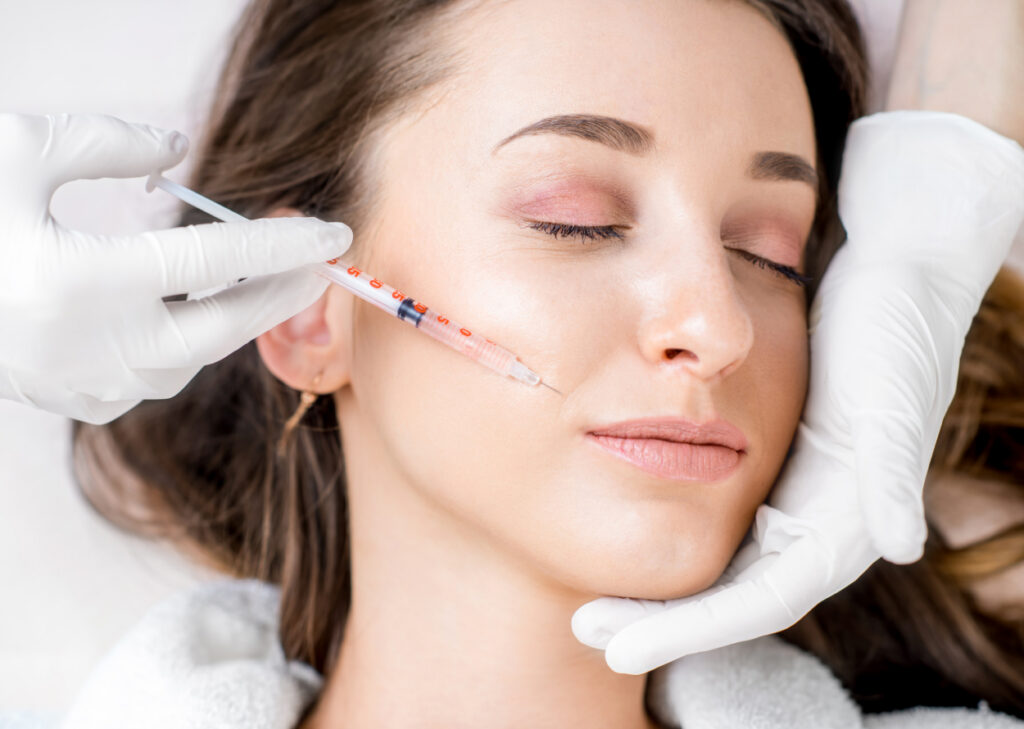
Vascular occlusion is what happens when filler is inadvertently injected into or compresses a blood vessel, cutting off circulation to the surrounding tissue. It is rare. It is also one of the most serious complications in aesthetic medicine — and it requires immediate recognition and treatment.
The standard intervention for complications involving hyaluronic acid (HA) fillers—such as Juvederm® and Restylane®—is the immediate injection of hyaluronidase, an enzyme that dissolves the filler to restore blood flow. Time is the most critical variable: according to the Aesthetic Complications Expert (ACE) Group and consensus guidelines published in the Journal of Clinical and Aesthetic Dermatology, the “golden period” for treating vascular compromise is within the first 4 hours. While intervention within 24 to 48 hours may still mitigate permanent scarring, any delay beyond the initial window significantly increases the risk of irreversible tissue necrosis (skin death) or permanent vision loss.
Two important qualifications: hyaluronidase works only for HA-based fillers. It does not reverse non-HA products such as Sculptra or Radiesse. And not every injector carries hyaluronidase on-site, knows how to recognize early occlusion signs, or has the clinical background to manage the complication if it progresses.
This is where Dr. Hardaway’s background is genuinely different. Having completed a burn fellowship at Wayne State University and served as Director of the Burn Center at Detroit Receiving Hospital, she approaches injectable treatments with a surgeon’s understanding of tissue perfusion, vascular anatomy, and wound healing. That background isn’t a marketing credential, it’s the difference between a provider who has managed complex tissue emergencies and one who has not.
When a Med Spa May Be Appropriate
It would be dishonest to suggest that every injectable treatment requires a plastic surgeon. For some patients and some situations, a med spa with an experienced, well-credentialed injector is a reasonable choice.
Specifically, if you have an established relationship with a nurse injector you trust, have had multiple treatments without complications, and are returning for maintenance in a low-risk area, that continuity of care has real value. Familiarity with your anatomy, your response to the product, and your aesthetic goals matters.
The calculus shifts when you are a new patient, when you’re considering a new treatment area, when you have complex anatomy or prior complications, or when you’re combining multiple products or procedures. Those are the situations where the depth of training and the proximity of surgical oversight become more relevant —not less.
Seeing a Board-Certified Plastic Surgeon Offers Important Advantages
For patients who are new to injectables, considering a first-time treatment, or navigating any of the factors above, there are meaningful advantages to having your injectables performed or supervised by a board-certified plastic surgeon.
Surgical anatomy knowledge. A plastic surgeon understands facial anatomy at a depth that comes from operating in those same tissue planes. That knowledge informs injection technique, product selection, and the ability to recognize early warning signs of a complication.
Emergency preparedness. At our QUAD A-accredited surgical center, we are equipped and trained to manage complications. The facility meets accreditation standards that go beyond basic state licensing requirements. A Certified Registered Nurse Anesthetist is on-site for surgical procedures. The infrastructure for patient safety is built into the environment.
The burn and reconstructive background. Dr. Hardaway’s training in burn surgery and complex reconstruction gives her a tissue-level understanding that few purely cosmetic practitioners can match. Having treated patients with severe vascular compromise and complex wound healing challenges, she approaches injectable treatments with a level of anatomical respect and clinical caution that is directly relevant to patient safety — not just aesthetic outcomes.
Combination planning. If you’re considering both surgical and non-surgical options —or if your goals might eventually include a facelift, fat grafting, or other procedures— having those conversations with a surgeon who can see the full picture is valuable. Injectables and surgery interact. A surgeon who performs both can plan accordingly.
Questions to Ask Any Injector Before You Book
This is the framework you came here for. Before you commit to any injectable treatment —at a med spa, a dermatologist’s office, or a plastic surgeon’s practice— these are the questions worth asking.
1. What is your formal training in aesthetic injectables, and how long have you been performing them?
You’re looking for specific answers, not general reassurance. Years of experience and formal training pathways matter.
2. Are you board-certified, and by which board?
For physicians, look for American Board of Plastic Surgery (ABPS) certification. Be aware that not all boards carry the same standards —the American Society of Plastic Surgeons provides guidance on what board certification actually means.
3. Is a physician on-site during my treatment — and if so, who?
In Michigan, this is not guaranteed at a med spa. Ask directly.
4. Do you carry hyaluronidase on-site, and are you trained to manage vascular occlusion?
This is not an alarmist question. It is a reasonable patient safety question. A confident, experienced injector will answer it without hesitation.
5. What products do you use, and are they FDA-approved?
Counterfeit and non-FDA-approved injectables exist in the market. Your provider should be able to tell you exactly what they’re using and where it’s sourced.
6. What is your complication management protocol?
What happens if something goes wrong during or after your treatment? Who do you call? What can be done on-site?
7. Is this facility accredited?
Accreditation by bodies like QUAD A indicates that the facility meets established safety and quality standards beyond basic state licensing.
8. Can I see before and after photos of patients with similar anatomy and goals?
Results should be consistent, natural-looking, and representative of your starting point — not just the best-case outcomes.
If you’d like to discuss your injectable goals with a board-certified plastic surgeon, we invite you to learn more about our minimally invasive treatments at our Farmington Hills practice and schedule a visit to our comfortable, private environment. All consultations are paid and appointment-based to ensure you receive dedicated time and a personalized plan.
What to Expect at Our Farmington Hills Practice
At Aesthetic Plastic Surgery & Laser Center, injectable treatments are performed or closely supervised by Dr. Hardaway, a board-certified plastic surgeon with over 20 years of experience in aesthetic and reconstructive surgery.
Every consultation begins with a thorough review of your goals, your anatomy, and your health history. There is no flaw-finding. There is no upselling. The plan is tailored specifically to each patient — what you want to achieve, what will look natural on your face, and what approach makes the most sense given your anatomy and your timeline.
Our facility is QUAD A accredited, located on Orchard Lake Road in Farmington Hills, and designed to feel like a comfortable, private environment —not a high-volume treatment center. We offer financing options for qualified patients through CareCredit.
We do not accept insurance.
Your Next Step
The right injector isn’t just about the treatment itself. It’s about the full picture — training, oversight, emergency preparedness, and what happens if you’re ever in the 1% of cases where something unexpected occurs.
If you’re ready to have that conversation with a board-certified plastic surgeon who has spent over 20 years treating both the art and the medicine of facial aesthetics, we’d welcome the opportunity to meet you.
Learn more about our Botox and filler treatments in Farmington Hills and schedule your paid consultation today. All consultations are appointment-based to ensure dedicated time and a personalized plan tailored specifically to you.
Frequently Asked Questions
Is it safe to get Botox at a med spa?
For many patients, routine Botox treatments at a med spa with an experienced, trained injector go smoothly. The key variables are the injector’s depth of training, the facility’s emergency preparedness, and whether a physician is on-site or readily available. In Michigan, med spas are not required to be physician-owned or physician-operated, and the supervising physician may not be physically present during your treatment. Asking specific questions about training, oversight, and complication protocols before you book is a reasonable and smart step.
What qualifications should my injector have?
At a minimum, your injector should be a licensed medical professional with documented training in aesthetic injectables. For physician injectors, look for board certification through the American Board of Plastic Surgery (ABPS). Beyond credentials, ask about their specific experience with the products being used, their complication management training, and whether they carry hyaluronidase on-site for HA filler emergencies. Facility accreditation — such as QUAD A — is an additional quality and safety signal worth asking about.
What is vascular occlusion, and how is it treated?
Vascular occlusion occurs when dermal filler is injected into or compresses a blood vessel, restricting blood flow to the surrounding tissue. It is a rare but serious complication. For hyaluronic acid (HA) fillers — such as Juvederm or Restylane — the standard treatment is hyaluronidase, an enzyme that dissolves the filler and helps restore circulation. Prompt recognition and treatment are critical to minimizing tissue damage. It’s worth noting that hyaluronidase does not work on non-HA fillers such as Sculptra or Radiesse. Not all injectors carry hyaluronidase or are trained to recognize and manage this complication — which is one reason the clinical background of your provider matters.
 Why a Lower Facelift and Neck Lift Are Almost Always Performed Together — A Surgeon’s Explanation
