

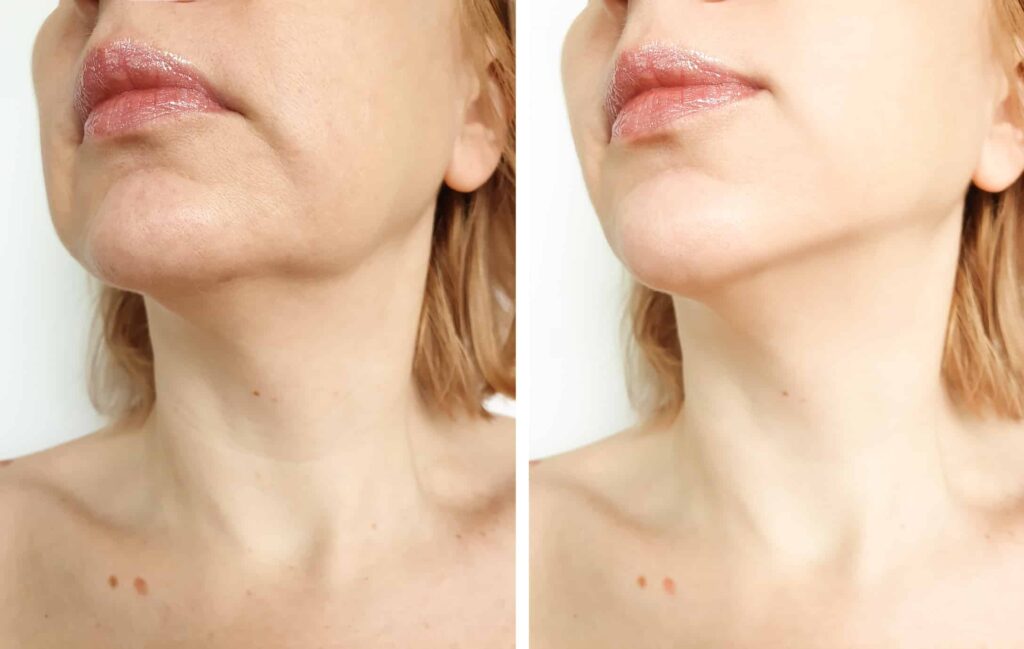
Key Takeaways
- The SMAS (the structural layer lifted in a facelift) and the platysma (the muscle addressed in a neck lift) are anatomically continuous — they are, in effect, the same layer transitioning from face to neck.
- Tightening the SMAS without addressing the platysma can actually make neck laxity more visible by contrast, not less.
- For most patients with jowling and neck laxity, combining both procedures is not a convenience — it’s a structural necessity rooted in anatomy.
- One combined recovery is typically easier to manage than two separate procedures and two separate recoveries.
Many patients ask this question during their consultation: “Do I really need both — or is that just more surgery?” It’s a fair question, and I want to answer it honestly. The reason a lower facelift and neck lift are almost always recommended together has nothing to do with doing more. It has everything to do with the way the face and neck are built — and the way they age together.
If you’re researching this combination, you’re likely seeing jowling along your jawline and laxity in your neck at the same time. That’s not a coincidence. It’s anatomy.
The Anatomy Behind the Jawline — Why the Face and Neck Age Together
To understand why these procedures are paired, it helps to understand one key anatomical fact that most patients — and, frankly, most competing articles — never explain clearly.
Beneath the skin of your lower face lies a structural layer called the SMAS — the superficial musculoaponeurotic system. This is the layer a surgeon actually repositions during a facelift; lifting skin alone produces the tight, pulled look patients fear. The SMAS is what creates lasting, natural results.
Now here’s what matters: the SMAS doesn’t stop at your jawline. It continues directly into the platysma, the thin, paired muscle that runs down the front of your neck. These are not two separate structures. Think of them as one continuous curtain — not two panels. The SMAS is the upper portion; the platysma is the lower. They are the same structural layer, transitioning from face to neck.
Because they’re connected, they age together. The jowling you see along your jaw and the banding or laxity you see in your neck are the same process — gravity and tissue descent — playing out across one continuous anatomical system.
What Happens When You Lift the Face Without the Neck
This is where the surgical logic becomes impossible to ignore.
When a surgeon tightens the SMAS during a facelift, they are creating upward tension in the lower face. That tension has a boundary — your jawline. Below that boundary, if the platysma has not been addressed, the neck remains exactly as it was. And because the jawline above it is now sharper and more defined, the contrast with the untreated neck below it becomes more pronounced, not less.
A surgically improved jawline above a loose, banded neck doesn’t look balanced. It draws the eye directly downward. Patients who have seen results from facelift-only procedures on patients who needed both often describe the outcome as “something looks off” — and that’s exactly why. The improvement in one zone highlights the untreated adjacent zone.
The question isn’t whether you need both. For most patients presenting with jowling and neck laxity together, the real question is: why would you do only one?
Recommending both procedures isn’t upselling. It’s preventing an incomplete outcome. A surgeon who recommends only a facelift when your neck clearly needs attention isn’t saving you money — they’re setting you up for a result that may look unbalanced, and potentially a second procedure to correct it.
What the Combination Procedure Actually Does
A lower facelift addresses the lower third of the face — the jowls, the descent of tissue along the jawline, and the loss of definition at the jaw-neck angle. The SMAS is elevated and repositioned, restoring the structural support that has shifted with age. This is not a skin-tightening procedure. It’s a structural repositioning.
A neck lift addresses the neck itself — the platysmal banding (those vertical cords that appear in the front of the neck), excess skin laxity, and submental fat beneath the chin. According to the American Society of Plastic Surgeons, a neck lift can address loose neck skin, excess fat deposits, and muscle banding to restore a smoother, more defined neck contour.
Together, they restore the jaw-to-neck transition — the angle that defines a refreshed, balanced profile.
The Role of Platysmaplasty in Neck Rejuvenation
Platysmaplasty is the specific technique used to address the platysma muscle from the inside. In plain terms: rather than simply tightening the overlying skin, the surgeon repairs the platysma muscle itself — bringing the two edges of the muscle together at the midline and securing them. This creates the clean, defined jaw-to-neck angle that patients describe as looking “natural” rather than “done.”
As described in the NIH StatPearls entry on platysmaplasty, this technique directly addresses the underlying muscular cause of neck banding and laxity — not just the surface appearance. That distinction matters. Skin-only tightening doesn’t hold the same way over time, and it doesn’t address the structural cause of the problem.
This is a structural correction. It’s why the results last.
Recovery Timeline for a Combined Lower Facelift and Neck Lift
One of the most practical arguments for combining these procedures is recovery. Most patients find that one combined recovery is significantly easier to manage than two separate procedures with two separate recovery periods.
Here’s what a typical recovery looks like, though individual experiences vary based on health, anatomy, and the extent of the procedure:
- Week 1: Swelling and bruising are at their peak. Rest is essential. Most patients are comfortable at home, managing with prescribed medications and light activity only.
- Week 2: Swelling begins to resolve. Most patients feel presentable in private settings — comfortable with close family or friends, though not yet ready for public-facing activities.
- Week 4: The majority of patients have returned to most normal daily activities. Residual swelling continues to improve. Light exercise may be cleared by this point, depending on individual healing.
- Week 6 and beyond: Final results begin to emerge as deeper swelling resolves. Incisions continue to fade and soften. Most patients are fully back to their routines.
Individual recovery timelines vary. The information above reflects typical experiences and should not be interpreted as a guarantee. Your surgeon will provide a personalized recovery plan based on your specific procedure and health history.
Are You a Candidate? What to Expect at Your Consultation
If you’re wondering whether you’re a candidate for a combined lower facelift and neck lift, the best next step is a paid consultation with Dr. Hardaway. All consultations are paid and appointment-based to ensure you receive dedicated time and a personalized plan.
The patients who benefit most from combining a lower facelift and neck lift are those presenting with both jowling and neck laxity simultaneously, which is, by far, the most common presentation in patients seeking facial rejuvenation. The two concerns almost always appear together because, as we’ve established, they share the same anatomical origin.
Some patients may present with more isolated concerns — a younger patient with minimal descent in one zone, or someone with a specific structural issue that doesn’t involve both areas. In those cases, a single procedure may be entirely appropriate. But these presentations are the exception, not the rule.
At your consultation, Dr. Hardaway evaluates your facial anatomy, skin quality, tissue laxity, and the specific zones of descent to build a plan tailored to your goals and your structure. No two plans are identical. The goal is always to restore what you recognize in yourself — not to impose a result that looks like someone else.
The best way to determine whether you’re a candidate is through a thorough evaluation with a board-certified plastic surgeon.
Incision Placement — Where Scars Are Hidden
A common concern — and a reasonable one — is where incisions are placed and how visible they’ll be. For a combined lower facelift and neck lift, incisions are designed to follow the natural contours of the face and hairline, making them difficult to detect once healed.
Typical incision placement includes:
- Around the ear — beginning in the natural crease in front of the ear, continuing around the earlobe, and extending behind the ear into the lower hairline. At rest, these incisions are hidden within natural skin folds.
- Into the temporal hairline — a short extension that allows for tissue repositioning while keeping the incision within the hair-bearing scalp.
- Submental incision — a small incision placed beneath the chin, in the natural crease, to access the platysma for platysmaplasty. This incision is nearly invisible at rest and heals exceptionally well.
For more details on how incisions are placed and how scars are managed over time, see our page on facelift incision placement and scar concealment.
Dr. Hardaway’s background — including her burn fellowship training and years as Director of the Burn Center at Detroit Receiving Hospital — gives her a particularly deep understanding of tissue healing, wound management, and scar maturation. That experience directly informs how she approaches incision placement and closure in every facelift procedure.
What to Do Next
The combination of a lower facelift and neck lift isn’t about doing more surgery. It’s about doing it right — addressing the full anatomical system that has changed, so the result holds up over time and looks balanced from every angle.
For patients with jowling and neck laxity presenting together, treating one without the other is an incomplete choice. The anatomy demands both.
Dr. Hardaway brings over 20 years of experience in aesthetic surgery, board certification in plastic surgery, and a surgical background — including burn surgery and reconstructive leadership — that few practices in the Farmington Hills area can match. Her approach to facial rejuvenation is grounded in the same principles she applied to complex reconstruction: respect for tissue planes, careful wound management, and results that hold up because they’re built on structure, not just surface.
Schedule Your Consultation
If you’re ready to understand what a combined lower facelift and neck lift could mean for your specific anatomy and goals, we’d welcome the conversation.
Schedule a consultation at our Farmington Hills practice →
All consultations are paid and appointment-based to ensure you receive dedicated time and a personalized plan. We offer financing options for qualified patients.
Frequently Asked Questions
Can you get a facelift without a neck lift?
Yes — technically, a facelift can be performed without a neck lift. But for most patients who present with both jowling and neck laxity, doing only a facelift often produces an imbalanced result. Because the SMAS (the structural layer addressed in a facelift) and the platysma (the muscle addressed in a neck lift) are anatomically continuous, tightening one without addressing the other can make the untreated area appear more pronounced by contrast. A board-certified plastic surgeon can evaluate your specific anatomy and recommend whether one or both procedures are appropriate for your goals.
How long does recovery take for a combined lower facelift and neck lift?
Most patients follow a recovery arc of approximately six weeks, though individual timelines vary. Typically, the first week involves peak swelling and bruising with rest at home; by week two, most patients are comfortable in private settings; by week four, most have returned to normal daily activities; and by week six and beyond, final results begin to emerge as residual swelling resolves. One combined recovery is generally easier to manage than two separate procedures with two separate recovery periods. Your surgeon will provide a personalized recovery plan based on your procedure and health history.
What is platysmaplasty, and is it included in a neck lift?
Platysmaplasty is a surgical technique that addresses the platysma muscle — the thin, paired muscle running down the front of the neck — from the inside. Rather than simply tightening the overlying skin, the surgeon repairs the muscle itself, bringing its edges together at the midline to create a smooth, defined jaw-to-neck contour. Platysmaplasty is typically performed as part of a neck lift when platysmal banding (the vertical cords visible in the front of the neck) or significant muscle laxity is present. Whether it is included in your procedure depends on your anatomy and what your surgeon finds during evaluation.
 What Does Liposuction Actually Cost in Metro Detroit? A Surgeon’s Guide to Reading Your Quote
